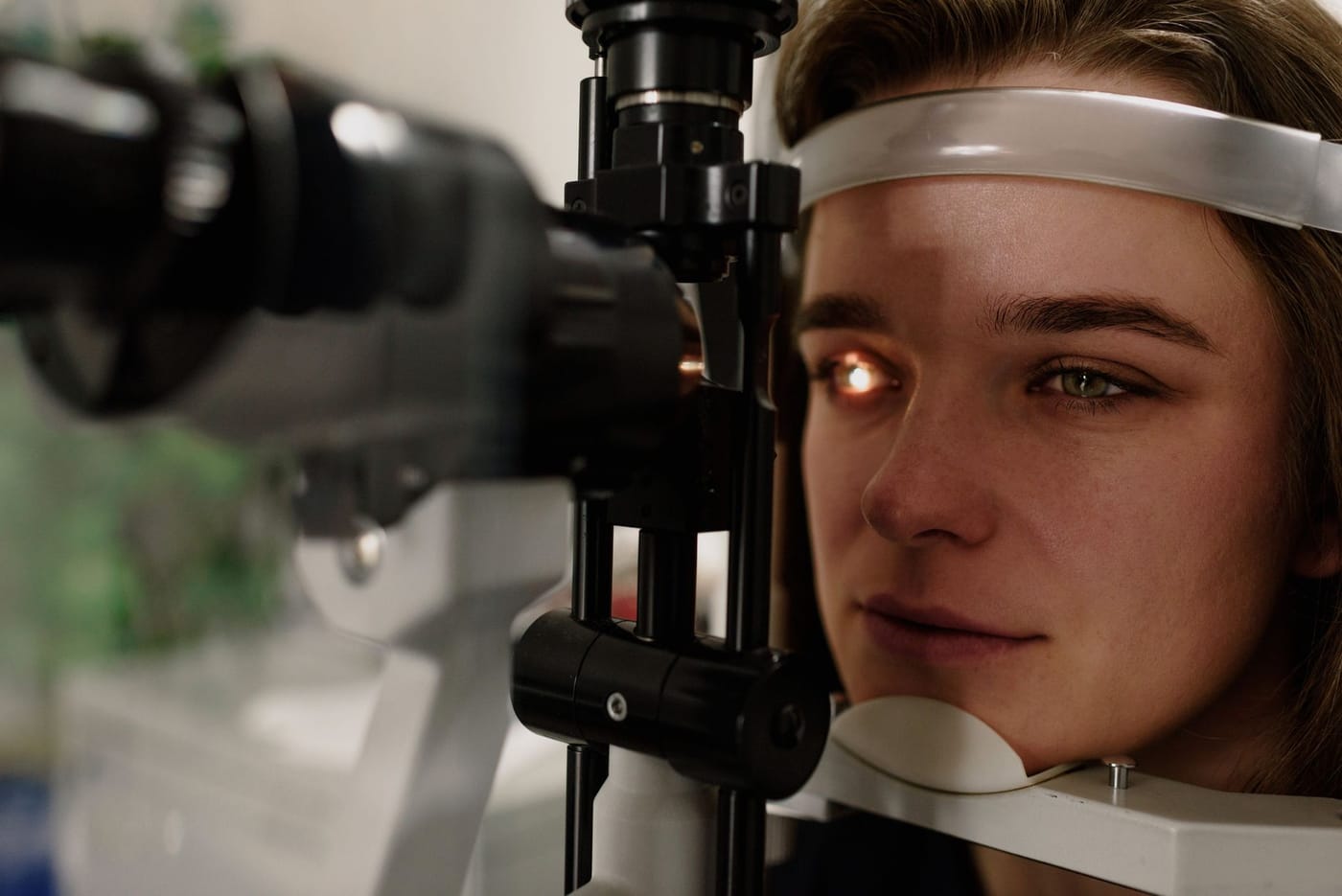
How can Pigment Dispersion Syndrome lead to Glaucoma?
In pigment dispersion syndrome, pigment rubs off the back of the iris and settles in the eye's drainage meshwork. In a minority of people — studies suggest roughly 10 to 15 percent over 5 to 15 years — this clogs outflow enough to raise eye pressure, which can damage the optic nerve and lead to pigmentary glaucoma. It's more common in younger, nearsighted people who may be surprised to hear the word glaucoma. Not everyone develops it, but monitoring pressure, the optic nerve, and visual fields matters, and rising pressure should be treated without delay.

§Read video transcript
Pigment dispersion syndrome is a condition that happens when pigment rubs off of the back of the iris of the eye when the fibers supporting the lens rub against it. This pigment is deposited in the trabecular meshwork of the eye, where the fluid drains out. Up to 50 percent of people with this condition can develop elevated eye pressure and glaucoma if the pigment decreases the outflow of fluid. This condition is more common in people that are nearsighted. Your doctor will perform a careful exam of the lens after your pupils are dilated to detect the subtle signs of exfoliation. Remember that caring for your eyesight begins with complete eye examinations. A comprehensive evaluation is the best way to detect eye conditions such as glaucoma early, so that it can be addressed before it develops into something more serious.
Medical sources
- aao.org/eye-health/diseases/what-is-pigment-dispersion-syndrome
- aao.org/eye-health/diseases/what-is-glaucoma
This page and video are for general patient education and are not a substitute for a medical examination, diagnosis, or treatment. Eye conditions vary by individual. For advice about your eyes, schedule an evaluation with May Eye Care Center. In an emergency, call 911.
Schedule your eye exam at May Eye Care Center in Hanover, PA
Serving York, Gettysburg, Adams County, and northern Maryland (driving distances). Call (717) 637-1919 or explore more about glaucoma at our practice.
Call (717) 637-1919