What is secondary Glaucoma?
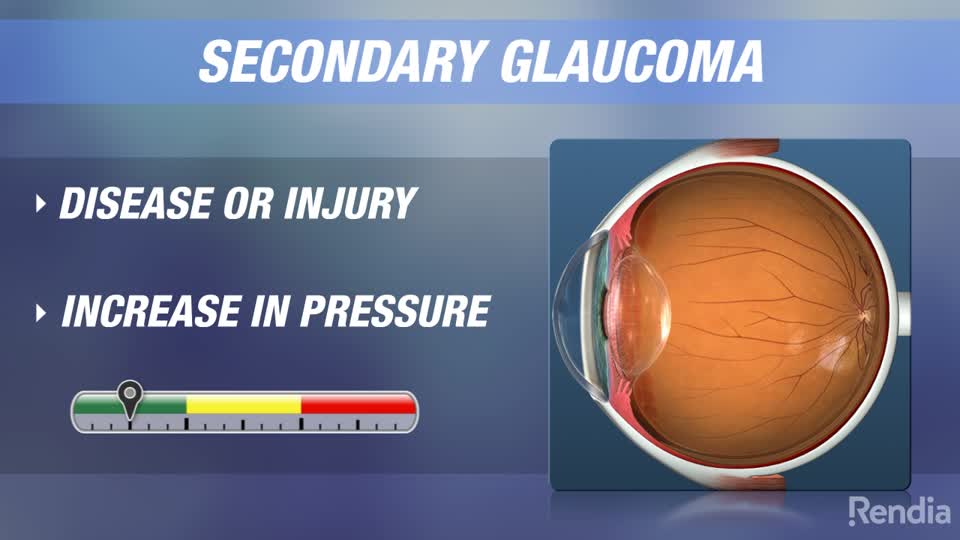
Secondary glaucoma means another eye problem is driving up the pressure or endangering the optic nerve. Causes include inflammation, injury, steroid use, pseudoexfoliation, pigment dispersion, advanced diabetic eye disease, prior surgery, or a tumor. These cases can behave more aggressively than routine glaucoma because the underlying trigger may keep harming the eye's drainage system. Effective treatment depends on identifying and addressing that cause, not just lowering the pressure number, so glaucoma that appears suddenly or behaves unusually warrants a careful search for why.
§Read video transcript
Secondary glaucoma occurs as a result of another disease or injury that causes or contributes to an increase in the eye's intraocular pressure. Secondary glaucoma may be caused by an eye injury, inflammation, a tumor, certain drugs such as steroids, and advanced cases of cataracts or diabetes. The type of treatment will depend on the underlying cause, but usually includes medications such as eye drops, laser surgery, or conventional surgery. If you have eye conditions that may lead to secondary glaucoma, it is important that you have regular vision exams that include glaucoma screening.
Medical sources
- aao.org/eye-health/diseases/what-is-glaucoma
- americanglaucomasociety.net/patient-family-resources/glaucoma-basics-faqs
This page and video are for general patient education and are not a substitute for a medical examination, diagnosis, or treatment. Eye conditions vary by individual. For advice about your eyes, schedule an evaluation with May Eye Care Center. In an emergency, call 911.
Schedule your eye exam at May Eye Care Center in Hanover, PA
Serving York, Gettysburg, Adams County, and northern Maryland (driving distances). Call (717) 637-1919 or explore more about glaucoma at our practice.
Call (717) 637-1919