
What Is Optic Neuritis?
Optic neuritis is inflammation of the optic nerve, the cable that carries visual signals from the eye to the brain. It typically causes blurred vision, dim or washed-out colors, and a blind spot in one eye, often with pain that worsens when you move the eye. It most commonly affects adults younger than 45 and more women than men, and in some people it can be the first sign of multiple sclerosis. Most people recover much of their vision, and evaluation is important because the inflammation and its underlying cause need to be identified and sometimes treated.
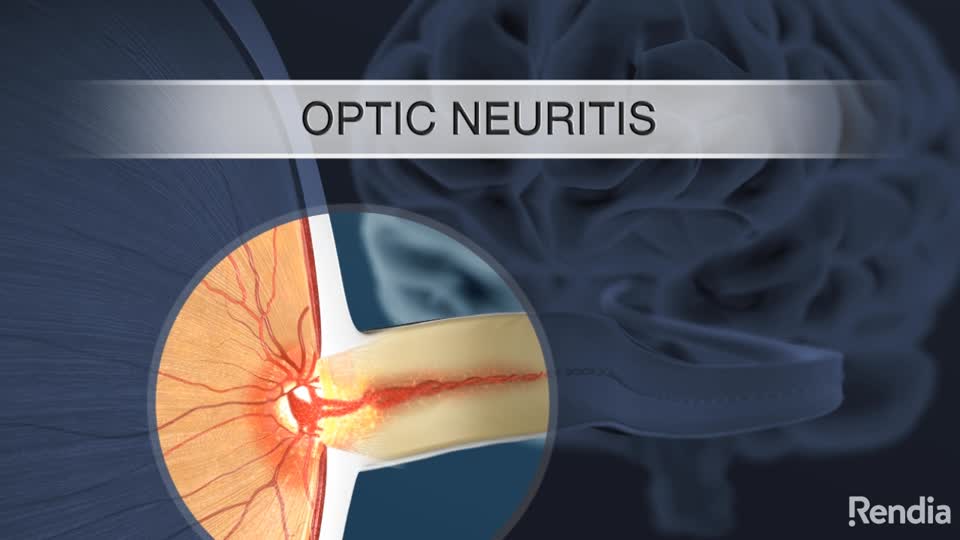
§Read video transcript
Optic neuritis is inflammation of the optic nerve, the structure that connects the eye to the brain. Symptoms from optic neuritis can include blurred vision and blind spots. Other visual symptoms may include distorted vision, reduced color vision and pain when moving your eyes. Optic neurtis most commonly occurs in adults younger than forty-five and affects more women than men. However, it can affect individuals at any age if they suffer from auto-immune disorders, such as Rheumatoid Arthritis or Diabetes. In some people, signs and symptoms of optic neuritis may be an indication of multiple sclerosis, a condition resulting in inflammation and damage to nerves in your brain and spinal cord. Most people who experience a single episode of optic neuritis eventually recover their vision. During an eye exam, your eye care professional will look for signs of optic neuritis, by conducting tests to evaluate whether you have reduced vision. Your eye pressure will be measured, and your pupils will be dilated to provide a better view of the eye's interior structures, including the optic nerve and retina. Optic neuritis typically gets better on its own. In some cases, steroid medications are used to help reduce inflammation in the optic nerve.
Key Takeaways
- Optic neuritis is inflammation of the optic nerve that usually affects one eye and causes blurred vision, blind spots, and reduced color vision.
- Pain with eye movement is a classic feature and helps distinguish it from other causes of vision loss.
- It most often occurs in adults under 45 and affects more women than men, and can occur at any age with inflammatory conditions such as multiple sclerosis, NMOSD, MOG antibody disease, lupus, or sarcoidosis.
- In some people it is an early indication of multiple sclerosis, so a brain MRI is often part of the workup.
- Most people recover their vision over weeks; steroids can speed recovery, and prompt evaluation is important.
Why Patients Ask This Question
Patients notice that vision in one eye has become blurry or dim over hours to days, colors look faded or gray, and moving the eye hurts. The combination of vision loss with eye-movement pain is unusual and worrying, and many want to understand whether it will get better and what it means for their overall health.
What This Means for Your Eyes
The optic nerve connects the eye to the brain, and when it becomes inflamed, the signals it carries are disrupted, so vision blurs, colors desaturate, and a blind spot can appear, usually in one eye. Because the problem is in the nerve rather than the front of the eye, the eye often looks normal from the outside even while vision is affected.
The visual loss commonly worsens over a few days and then stabilizes. The reassuring news is that most people who have a single episode eventually recover much of their vision, though some are left with subtle changes in color perception or contrast.
Detailed Explanation
Optic neuritis results from inflammation, often immune-mediated, that damages the insulating covering of the optic nerve fibers and slows or blocks the visual signal. The hallmark features are subacute vision loss in one eye developing over hours to days, dimming of color vision (colors look washed out), a central or other blind spot, and pain that is worse with eye movement.
It most commonly occurs in adults younger than 45 and affects more women than men. It can occur at any age in association with inflammatory conditions — most classically multiple sclerosis, as well as neuromyelitis optica spectrum disorder (NMOSD), MOG antibody disease, lupus, and sarcoidosis. Importantly, in some people, the signs and symptoms of optic neuritis are an early indication of multiple sclerosis, a condition that causes inflammation and damage to nerves in the brain and spinal cord. This link is why the evaluation looks beyond the eye. The typical course is that vision worsens for several days, then gradually improves over weeks, and most people who have a single episode eventually recover their vision.
When This May Be Serious
Any new loss of vision in one eye should be evaluated promptly. Optic neuritis needs timely assessment because it can signal an underlying condition such as multiple sclerosis and because other causes of optic-nerve vision loss, including giant cell arteritis in older patients, require urgent treatment. Seek prompt care for vision loss in one eye, especially with pain on eye movement or fading colors, and treat it as more urgent if vision loss is sudden and severe, affects both eyes, or comes with a severe headache, scalp tenderness, or jaw pain, or with neurologic symptoms like weakness or numbness.
How an Ophthalmologist Evaluates This
During the eye exam, the eye care professional looks for signs of optic neuritis by testing whether vision is reduced, checking color vision, and examining the pupils for a relative afferent defect. Eye pressure is measured, and the pupils are dilated to give a better view of the interior structures, including the optic nerve and retina; the nerve head may look normal or swollen. Visual field testing maps the blind spot, and OCT imaging can assess the nerve. Because of the link to multiple sclerosis, a brain MRI and coordination with neurology are commonly arranged, and blood tests help identify autoimmune or infectious causes.
Treatment Options
Optic neuritis typically gets better on its own, and vision usually recovers over weeks. In some cases, steroid medications are used to help reduce inflammation in the optic nerve and can speed the pace of recovery, often given intravenously. Treatment also addresses the underlying cause: if evaluation points to multiple sclerosis or another autoimmune condition, care is coordinated with neurology and may include disease-modifying therapy. Because management can involve neurology, imaging, and sometimes rheumatology, an accurate diagnosis comes first so the right plan can follow.
What You Should Not Do
- Do not dismiss new blurred vision or faded colors in one eye as tiredness; have it examined.
- Do not assume painful vision loss is a routine eye strain problem, especially with color changes.
- Do not skip the recommended neurologic evaluation or MRI, since a first episode can point to multiple sclerosis.
- Do not start or stop steroids on your own; they are used selectively and under medical guidance.
When to Call May Eye Care Center
If you develop blurred or dim vision in one eye, faded colors, or pain when moving the eye, contact May Eye Care Center promptly so the optic nerve can be examined and the right workup arranged. If vision loss is sudden and severe, affects both eyes, or comes with a severe new headache, scalp tenderness, jaw pain, or weakness or numbness, seek emergency care immediately.
Bottom Line
Optic neuritis is inflammation of the optic nerve that usually causes blurred vision, faded colors, and pain with eye movement in one eye; most people recover, but because it can be an early sign of multiple sclerosis, prompt evaluation and appropriate follow-up matter.
This page also answers
- When are vision changes with headache dangerous?
- Can migraine aura look like an eye problem?
- When is double vision or temporary vision loss urgent?
- Can a pupil change mean a neurologic problem?
- Should I see an ophthalmologist or go to the ER?
- When should this be checked urgently?
- What testing helps confirm the diagnosis?
- What treatments are available?
- What should patients avoid doing at home?
Medical sources
- aao.org/eye-health/diseases/what-is-optic-neuritis
- mayoclinic.org/diseases-conditions/optic-neuritis/symptoms-causes/syc-20354953
This article is for educational purposes only and is not a diagnosis, treatment plan, or substitute for an eye examination by a qualified eye doctor. Eye symptoms can have many causes, and some problems can threaten vision if they are not treated promptly. Do not diagnose or treat yourself based only on online information. If you have eye pain, sudden vision loss, flashes, new floaters, a curtain or shadow in your vision, double vision, chemical exposure, trauma, severe redness, light sensitivity, or any concerning eye symptom, seek urgent medical eye care or emergency care.
Schedule your eye exam at May Eye Care Center in Hanover, PA
Serving York, Gettysburg, Adams County, and northern Maryland (driving distances). Call (717) 637-1919 or explore more about neuro-ophthalmology at our practice.
Call (717) 637-1919