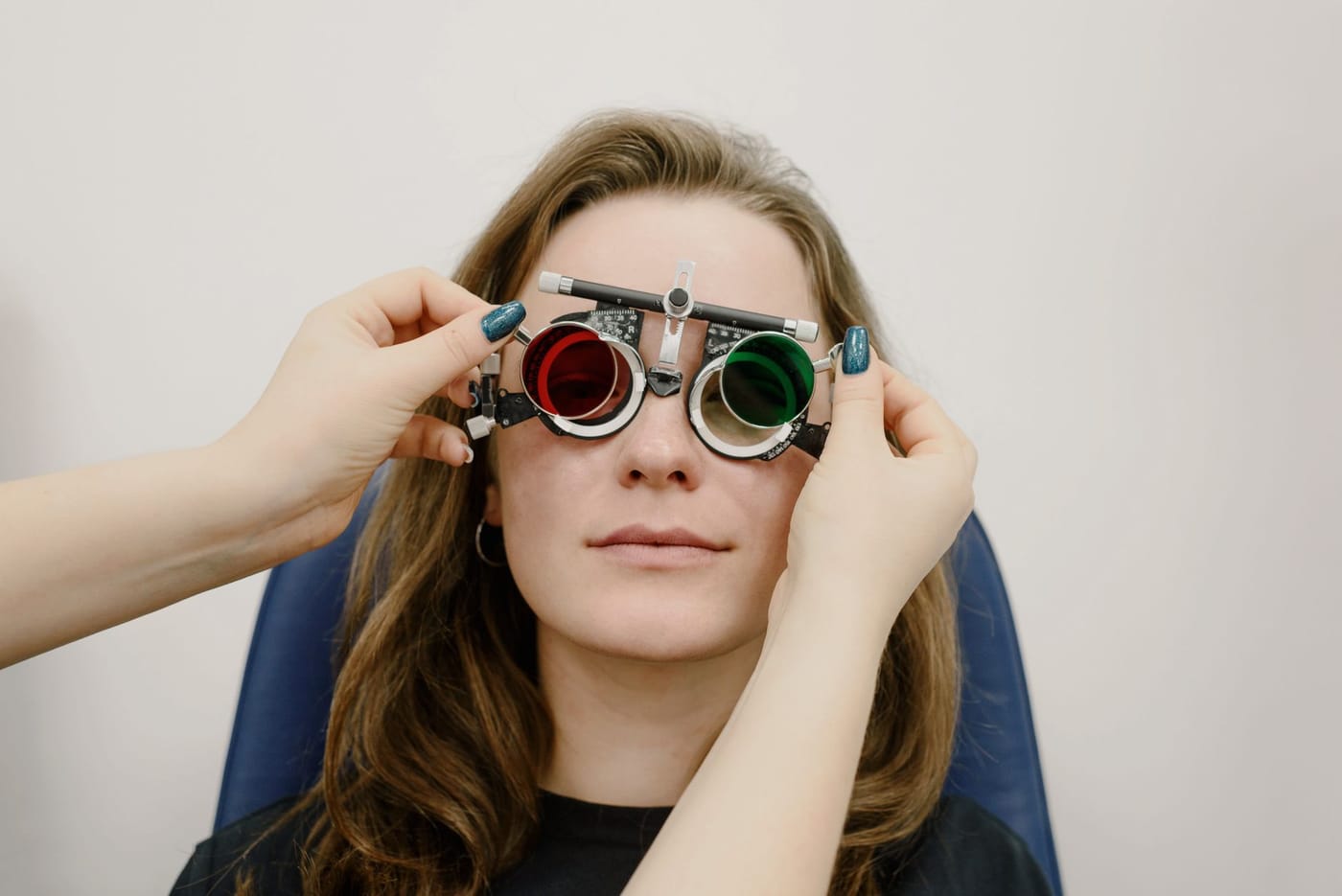
Can an Eye Exam Detect a Stroke or Brain Problem?
Sometimes, yes. Certain strokes and brain problems show up as specific vision changes an eye doctor can detect, such as a loss of the same half of vision in both eyes, new double vision, an abnormal pupil, optic-nerve swelling, or tiny retinal emboli. The eye exam can raise the alarm and point toward the brain, but a stroke is diagnosed with brain imaging. Sudden neurologic symptoms are an emergency and call for 911, not an eye appointment.
Key Takeaways
- The eye and its nerves connect directly to the brain, so some strokes produce telltale visual signs.
- Loss of the same side of vision in both eyes can indicate a stroke affecting the brain's visual pathway.
- New double vision, a drooping lid with an abnormal pupil, or eye-movement problems can reflect a brain or nerve issue.
- Optic-nerve swelling can signal raised pressure in the brain from a tumor or other cause.
- Retinal emboli (small clots) can point to a source that also threatens the brain, warning of stroke risk.
- Sudden weakness, facial droop, slurred speech, or vision loss is a stroke emergency; call 911 immediately.
Why Patients Ask This Question
People are often struck by the idea that an eye doctor might detect something as serious as a stroke, and they want to know if a visual symptom they are having could be coming from the brain. Others have had a sudden vision change and are trying to understand whether it is an eye problem or something more dangerous. Because vision and the brain are so tightly linked, the question is a legitimate and important one.
What This Means for Your Eyes
A large part of the brain is devoted to vision, and the nerves that move the eyes and control the pupils run through the brainstem. So a stroke or lesion in these areas often reveals itself through the eyes rather than in the eye itself.
That means the "eye" symptom may actually be a brain symptom. A field of vision lost on one side, double vision, or a pupil that no longer works normally can all be the visible face of a neurologic problem, which is why these findings are taken so seriously.
Detailed Explanation
Different problems leave different signatures. A stroke in the brain's visual pathway typically causes a homonymous field loss, meaning the same side of vision is missing in both eyes, often with no pain and normal-looking eyes. Strokes or lesions affecting the nerves that move the eyes cause new double vision or a misaligned eye, and a third-nerve problem may add a drooping lid and an enlarged pupil, which can signal a dangerous aneurysm.
Inside the eye, the doctor may see a Hollenhorst plaque, a small glistening embolus lodged in a retinal artery that often comes from the carotid artery and warns of stroke risk. Optic-nerve swelling in both eyes (papilledema) can indicate raised pressure inside the skull from a mass or other cause. A sudden painless loss of vision in one eye can be a retinal artery occlusion, essentially a stroke of the eye, which carries a high risk of brain stroke and is a medical emergency.
Not every visual symptom means a stroke, but this overlap is exactly why a careful eye and neurologic examination matters. The eye findings guide whether urgent brain imaging and vascular workup are needed.
When This May Be Serious
This topic sits close to true emergencies. Call 911 immediately for sudden weakness or numbness on one side, facial droop, trouble speaking, severe imbalance, or sudden vision loss, which are signs of a stroke where minutes matter. Seek emergency care for new double vision, a drooping eyelid with an enlarged pupil, a sudden severe headache, or sudden painless loss of vision in one eye. Even a brief episode of vision loss that fully recovers can be a warning of impending stroke and needs prompt evaluation.
How an Ophthalmologist Evaluates This
The evaluation includes checking each eye's vision and, importantly, mapping the visual field to detect a pattern like homonymous loss that points to the brain. The doctor tests pupil reactions, eye alignment, and eye movements, and performs a dilated exam to look for retinal emboli, artery occlusion, or optic-nerve swelling. When findings suggest a neurologic cause, the ophthalmologist arranges urgent brain imaging (CT or MRI) and vascular studies, and coordinates directly with neurology or the emergency department rather than managing it as an eye-only problem.
Treatment Options
Treatment is directed at the underlying brain or vascular problem, not the eye alone, and is handled by neurology and stroke teams. That may involve emergency stroke care, blood thinners or other clot-prevention medication, carotid evaluation and possible surgery, and control of risk factors like blood pressure and cholesterol. A retinal artery occlusion is treated as a stroke equivalent with urgent workup. The ophthalmologist's role is often to recognize the warning sign quickly and get the patient into the right emergency and neurologic pathway.
What You Should Not Do
- Do not wait for a routine eye appointment if you have sudden neurologic symptoms; call 911.
- Do not dismiss double vision, a droopy lid with a big pupil, or one-sided vision loss as minor.
- Do not ignore a brief episode of vision loss that recovers; it can warn of a coming stroke.
- Do not assume a normal-looking eye means nothing is wrong; brain-based vision loss can leave the eye looking fine.
- Do not drive yourself to the hospital during possible stroke symptoms; get emergency help.
When to Call May Eye Care Center
Call for prompt evaluation if you notice new visual field loss, double vision, or other unexplained vision changes that are not clearly an emergency, and the practice can arrange the right testing and referral. For patients in the Hanover area, recognizing these signs early can be lifesaving. But if symptoms are sudden and include weakness, facial droop, trouble speaking, or sudden vision loss, call 911 and go to the emergency department immediately rather than calling an eye office.
Bottom Line
An eye exam can detect signs of a stroke or brain problem, from field loss to retinal emboli, and can trigger urgent workup, but a stroke is a 911 emergency; when in doubt about sudden neurologic symptoms, seek emergency care first.
This page also answers
- How often should adults have a dilated eye exam?
- What does an ophthalmologist check during an eye exam?
- Can an eye exam find glaucoma, diabetes, or retina problems?
- Do I need an eye exam if I see 20/20?
- When should I schedule a medical eye exam in Hanover PA?
- When should this be checked urgently?
- What testing helps confirm the diagnosis?
- What treatments are available?
- What should patients avoid doing at home?
Medical sources
- aao.org/eye-health/tips-prevention/eye-exams-101
- nei.nih.gov/eye-health-information/healthy-vision/finding-eye-doctor/get-dilated-eye-exam
- nei.nih.gov/eye-health-information/healthy-vision
This article is for educational purposes only and is not a diagnosis, treatment plan, or substitute for an eye examination by a qualified eye doctor. Eye symptoms can have many causes, and some problems can threaten vision if they are not treated promptly. Do not diagnose or treat yourself based only on online information. If you have eye pain, sudden vision loss, flashes, new floaters, a curtain or shadow in your vision, double vision, chemical exposure, trauma, severe redness, light sensitivity, or any concerning eye symptom, seek urgent medical eye care or emergency care.
Schedule your eye exam at May Eye Care Center in Hanover, PA
Serving York, Gettysburg, Adams County, and northern Maryland (driving distances). Call (717) 637-1919 or explore more about eye exam & vision at our practice.
Call (717) 637-1919