Do I Still Need Glasses After Cataract Surgery?
You may still need glasses after cataract surgery, depending on the lens implant, astigmatism, healing, other eye conditions, and your visual goals. Standard monofocal lenses usually provide best focus at one distance, so many patients still use reading glasses or glasses for certain tasks. Advanced lenses can reduce glasses dependence but cannot guarantee total freedom from glasses. This article is educational and does not replace a complete eye examination by a medical professional.
§Read video transcript
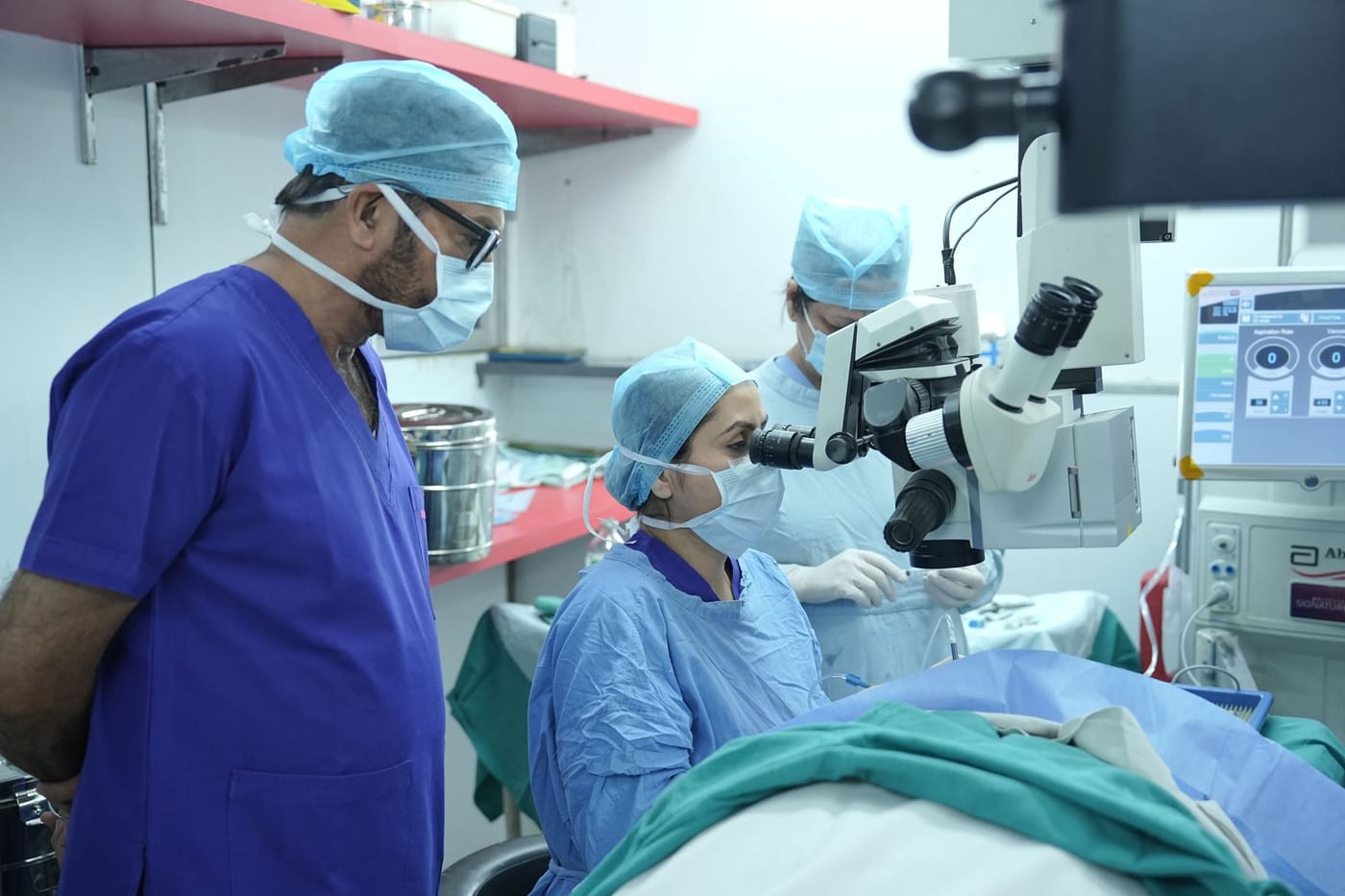
If you are like most patients, your old prescription glasses will no longer work very well with the newly operated eye. Some patients continue to use their old prescription eyeglasses to see with the un-operated eye. If the old prescription lens is bothersome to the newly operated eye, you may opt to remove the lens from your eyeglass frame. As your operated eye regains better distance vision, you may choose to stop wearing your old eyeglasses, for as many tasks as possible. In general, however, the better your eye is in focus for distance, the blurrier it will be up close without glasses. Until your eyeglass prescription is updated for the operative eye, you will not have optimal focus for both reading and far distance. Most patients wait several weeks following surgery until their prescription is stable, before changing or getting new eyeglasses. During this waiting period, one helpful hint is to try over-the-counter reading glasses in order to read. Sold at most drug and grocery stores, these temporary readers may not be perfect, but they are inexpensive and harmless to wear, and often provide reasonably good reading vision. They are available and labeled in 10 different powers that range from plus one (+1.00), up to plus three (+3.00). Choose a pair with the lowest power needed to see well with the operated eye. These reading glasses should work much better if you eventually have cataract surgery on your second eye. Although most patients are understandably nervous about undergoing cataract surgery, afterwards, the sense of relief is often accompanied by curiosity about what exactly was done. You should first appreciate that this is one of the most precise and delicate microsurgical operations in all of medicine, and is performed on one of the smallest and most precious parts of the body. It requires an operating microscope, microscopic instruments, a well trained team, and the unique skills, experience, and steady hands of your surgeon.
Key Takeaways
- Cataract surgery does not automatically eliminate glasses.
- Monofocal lenses usually require glasses for some distances.
- Toric lenses reduce astigmatism but do not always eliminate glasses.
- EDOF and multifocal lenses may reduce glasses dependence with tradeoffs.
- Other eye disease can limit glasses-free vision.
Why Patients Ask This Question
Patients often hope cataract surgery will fix everything: cataract, glasses, astigmatism, reading, driving, and computer vision. Surgery can dramatically improve clarity, but the glasses question depends on optical planning and eye health.
Many patients search for this because cataracts are common, gradual, and confusing. Vision may decline slowly enough that a person adapts without realizing how much clarity, contrast, night driving, or reading comfort has been lost. A clear answer helps patients know when to observe, when to schedule a comprehensive eye exam, and when cataract surgery deserves a serious discussion.
What This Means for Your Eyes
The artificial lens implant has a chosen focusing power. If the lens is aimed for distance, near vision may require readers. If aimed for near, distance may require glasses. Multifocal and EDOF lenses extend range, but they distribute light differently and may not be right for every eye.
The natural lens sits behind the pupil and helps focus light on the retina. When the lens becomes cloudy, light scatters before it reaches the retina. That scatter can create glare, halos, faded colors, blurry vision, and difficulty with driving at night. Cataract surgery replaces the cloudy natural lens with a clear artificial intraocular lens, also called an IOL.
Detailed Explanation
Glasses after surgery depend on residual prescription, astigmatism, lens design, eye dominance, healing, and whether both eyes are treated. A monofocal distance lens often provides good distance vision but leaves near tasks dependent on reading glasses. Monovision can reduce readers for selected patients but may affect depth perception. Toric lenses can reduce astigmatism, but small residual astigmatism may remain. EDOF lenses may help intermediate vision such as dashboard and computer. Multifocal or trifocal lenses may help near, but can create halos and contrast tradeoffs. Dry eye can blur vision even with a perfect lens calculation. Macular degeneration, diabetic eye disease, glaucoma, corneal disease, or amblyopia can also limit final glasses-free function.
The best cataract decision starts with matching the medical findings to the patient’s actual symptoms. Two patients can have cataracts that look similar under the microscope, but one may be bothered every day and the other may function well. Lighting needs, night driving, occupation, hobbies, eye dominance, astigmatism, dry eye, glaucoma, diabetic eye disease, macular degeneration, and prior LASIK all matter.
The simple answer is this: cataract care is not one-size-fits-all. A proper cataract evaluation includes the lens, cornea, retina, optic nerve, eye pressure, measurements for lens power, and a discussion of what the patient wants after surgery. The safest and most satisfying plan is the one based on both eye health and lifestyle.
When This May Be Serious
The topic is serious when patients have unrealistic expectations or are poor candidates for premium lenses. Patients who demand perfect night driving and perfect reading without glasses may be disappointed if tradeoffs are not discussed honestly.
Cataracts usually progress slowly, but not every blurry-vision complaint is a cataract. Sudden loss of vision, new flashes and floaters, a curtain or shadow in the vision, severe eye pain, marked redness, trauma, or nausea with eye pain should be treated urgently. Those symptoms can signal problems such as retinal detachment, infection, acute glaucoma, inflammation, or vascular disease.
How an Ophthalmologist Evaluates This
Evaluation includes refraction, biometry, corneal astigmatism measurements, topography, macular OCT when indicated, dry eye evaluation, pupil assessment, and a lifestyle discussion.
A cataract evaluation commonly includes visual acuity testing, refraction, slit-lamp examination, dilated retinal examination, intraocular pressure measurement, and often glare testing or contrast assessment. Before surgery, measurements such as optical biometry and corneal mapping help calculate the lens implant power and evaluate astigmatism. If the retina or optic nerve is a concern, OCT imaging or additional testing may be recommended.
Treatment Options
Treatment options include monofocal lens with glasses, toric lens, monovision, EDOF, multifocal/trifocal, light-adjustable lens strategies, postoperative glasses, or laser vision enhancement in selected cases.
Treatment should be individualized. For mild cataracts, stronger lighting, updated glasses, anti-glare strategies, and observation may be reasonable. Once cataracts interfere with daily activities, surgery is the only proven way to remove the cloudy lens. Lens implant choices may include monofocal, toric, extended-depth-of-focus, multifocal, or other advanced lens options depending on eye anatomy and goals.
What You Should Not Do
Do not assume you will never need glasses. Do not choose a lens based only on glasses independence. Do not ignore night-driving quality. Do not order new glasses until the eye is stable enough.
Do not assume that every vision symptom is “just cataract.” Do not rely on eye drops, supplements, or internet claims to dissolve a visually significant cataract. Do not choose a premium lens implant based only on advertising. Do not ignore dry eye, diabetic eye disease, macular degeneration, glaucoma, or corneal disease before making a cataract surgery plan.
When to Call May Eye Care Center
Patients should call May Eye Care Center in Hanover, PA when cataract symptoms interfere with reading, night driving, glare, work, hobbies, or confidence with daily activities. Patients from York, Adams County, South Central Pennsylvania, Carroll County Maryland, and surrounding areas often come to May Eye Care because they want a trusted ophthalmology center that explains the options clearly.
Regular eye exams are part of protecting vision for life. Your Vision is Our Focus, and that focus means more than surgery. It means a dependable destination for yearly eye health guidance, prevention, diagnosis, education, and advanced treatment when needed.
Bottom Line
Cataract surgery can reduce glasses dependence, but it does not automatically eliminate glasses. The best plan starts before surgery with honest discussion of lens targets, tradeoffs, and eye health.
A careful cataract evaluation is the right next step when vision is no longer matching your daily needs. The goal is not simply to “remove a cataract.” The goal is to protect eye health, improve useful vision when appropriate, and choose the safest lens and surgical plan for the individual patient.
Frequently asked questions
01Will I need readers after cataract surgery?
Many patients with monofocal distance lenses need readers for near tasks.
02Can premium lenses eliminate glasses?
They may reduce dependence but cannot guarantee no glasses.
03What if I have astigmatism?
A toric lens or other astigmatism treatment may reduce glasses need, but results vary.
04Why do I need glasses if the cataract is gone?
Because the implant has a specific focus and the eye may still have residual prescription or astigmatism.
05Can one eye be distance and one near?
Monovision can work for selected patients but should be discussed carefully.
06When can I get new glasses?
Usually after the eye stabilizes and your surgeon recommends refraction.
This page also answers
- Will you need glasses after Cataract surgery?
- What are the early symptoms of cataracts?
- When is cataract surgery necessary?
- Will I still need glasses after cataract surgery?
- Which lens implant is best for my lifestyle?
- What warning signs after cataract surgery require a call?
- When should this be checked urgently?
- What testing helps confirm the diagnosis?
- What treatments are available?
- What should patients avoid doing at home?
Medical sources
- aao.org/eye-health/treatments/what-are-iols
- aao.org/eye-health/diseases/what-is-cataract-surgery
- medicare.gov/coverage/eyeglasses-contact-lenses
- mayoclinic.org/diseases-conditions/cataracts/diagnosis-treatment/drc-20353795
This article is for educational purposes only and is not a diagnosis, treatment plan, or substitute for an eye examination by a qualified eye doctor. Eye symptoms can have many causes, and some problems can threaten vision if they are not treated promptly. Do not diagnose or treat yourself based only on online information. If you have eye pain, sudden vision loss, flashes, new floaters, a curtain or shadow in your vision, double vision, chemical exposure, trauma, severe redness, light sensitivity, or any concerning eye symptom, seek urgent medical eye care or emergency care.
Schedule your eye exam at May Eye Care Center in Hanover, PA
Serving York, Gettysburg, Adams County, and northern Maryland (driving distances). Call (717) 637-1919 or explore more about cataract surgery at our practice.
Call (717) 637-1919