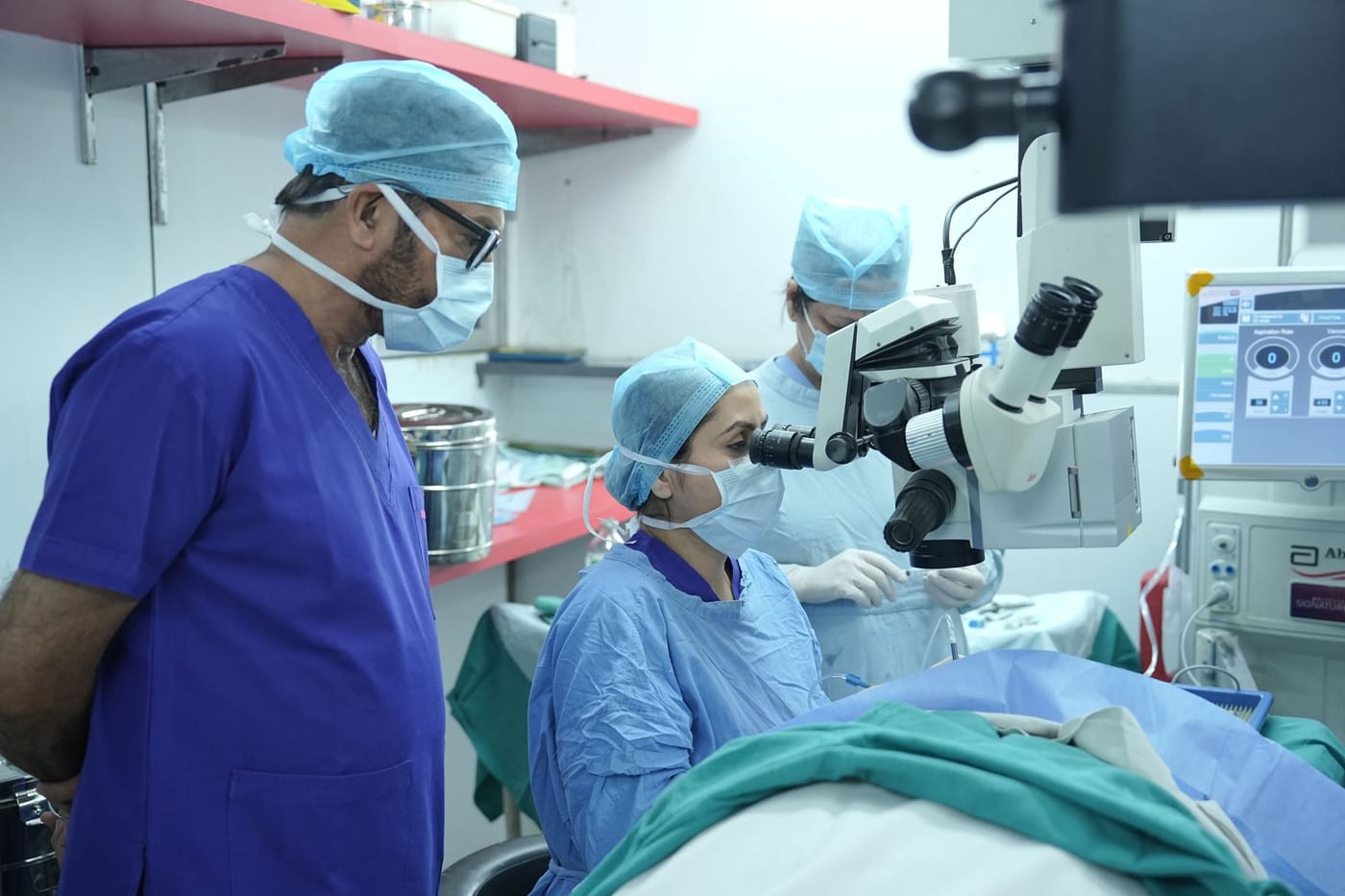
How Is Cataract Surgery Performed?
Cataract surgery is usually an outpatient procedure in which the cloudy natural lens is removed and replaced with a clear artificial lens implant. The most common method uses tiny incisions, ultrasound energy to break up the cloudy lens, and placement of an intraocular lens inside the eye. This article is educational and does not replace a complete eye examination by a medical professional.

§Read video transcript
If a cataract grows large enough to impair your vision, and affect your daily activities, cataract removal is recommended. Cataract removal is a common procedure, and is safely performed millions of times each year. During the procedure, the cataract surgeon removes the clouded lens that has affected your vision, and replaces it with a clear, artificial, intraocular lens. As a result, most patients can achieve a noticeable improvement in their vision. Cataract surgery used to require a fairly large incision in the eye, and the use of sutures to close that incision. Today, technological advances allow surgeons to work through an incision much smaller than in the past, usually requiring no sutures at all. Small incision cataract surgery, is made possible by using high frequency sound waves known as ultrasound, or phacoemulsification. The sound waves break a cataract up into tiny fragments, that can then be removed through the small incision. The other advance that makes small incision cataract surgery possible, is the foldable intraocular lens implant. These implants are made of soft materials, which can be folded like a taco, or rolled-up with a special instrument, allowing them to fit through very small incisions. Once inside the eye, these lenses unfold and return to their original shape. Small incision cataract surgery is less invasive, allows patients to resume normal activities soon after surgery, and provides the fastest recovery of vision.
Key Takeaways
- Cataract surgery is typically outpatient.
- The cloudy lens is removed and replaced with an intraocular lens.
- Most patients receive numbing anesthesia and go home the same day.
- Preoperative measurements determine lens implant power.
- Recovery requires eye drops, activity precautions, and postoperative visits.
Why Patients Ask This Question
Patients want to know what actually happens in the operating room. The idea of eye surgery sounds frightening, but modern cataract surgery is usually quick, controlled, and performed through very small incisions. Understanding the steps reduces anxiety and helps patients participate intelligently in lens-choice decisions.
Many patients search for this because cataracts are common, gradual, and confusing. Vision may decline slowly enough that a person adapts without realizing how much clarity, contrast, night driving, or reading comfort has been lost. A clear answer helps patients know when to observe, when to schedule a comprehensive eye exam, and when cataract surgery deserves a serious discussion.
What This Means for Your Eyes
The cataract is the cloudy lens inside the eye. During surgery, the surgeon opens the front of the lens capsule, removes the cloudy lens material, and leaves the capsule as a support structure for the artificial lens implant. The new lens becomes the eye’s focusing lens permanently.
The natural lens sits behind the pupil and helps focus light on the retina. When the lens becomes cloudy, light scatters before it reaches the retina. That scatter can create glare, halos, faded colors, blurry vision, and difficulty with driving at night. Cataract surgery replaces the cloudy natural lens with a clear artificial intraocular lens, also called an IOL.
Detailed Explanation
Before surgery, the eye is measured carefully. Biometry measures the length and curvature of the eye. Corneal testing identifies astigmatism. The surgeon reviews eye health, medications, prior surgeries, pupil size, retina status, and patient goals. On surgery day, the eye is numbed and cleaned. A small incision is made, the front capsule is opened, and the cataract is broken into small pieces and removed. The folded IOL is inserted through the small incision and positioned in the capsular bag. Many incisions seal without stitches, although surgical technique varies. Patients usually use prescribed drops after surgery and are seen for follow-up to check healing, pressure, inflammation, and vision.
The best cataract decision starts with matching the medical findings to the patient’s actual symptoms. Two patients can have cataracts that look similar under the microscope, but one may be bothered every day and the other may function well. Lighting needs, night driving, occupation, hobbies, eye dominance, astigmatism, dry eye, glaucoma, diabetic eye disease, macular degeneration, and prior LASIK all matter.
The simple answer is this: cataract care is not one-size-fits-all. A proper cataract evaluation includes the lens, cornea, retina, optic nerve, eye pressure, measurements for lens power, and a discussion of what the patient wants after surgery. The safest and most satisfying plan is the one based on both eye health and lifestyle.
When This May Be Serious
Cataract surgery is routine but still real surgery. Serious concerns after surgery include worsening pain, increasing redness, sudden vision decrease, flashes, floaters, curtain, significant discharge, or nausea with eye pain. These symptoms need prompt attention.
Cataracts usually progress slowly, but not every blurry-vision complaint is a cataract. Sudden loss of vision, new flashes and floaters, a curtain or shadow in the vision, severe eye pain, marked redness, trauma, or nausea with eye pain should be treated urgently. Those symptoms can signal problems such as retinal detachment, infection, acute glaucoma, inflammation, or vascular disease.
How an Ophthalmologist Evaluates This
Preoperative evaluation includes full eye examination, biometry, corneal measurements, and often OCT if retina disease is possible. Medical history and medication review are important, especially blood thinners, alpha-blocker medication history, diabetes, and prior LASIK or retinal surgery.
A cataract evaluation commonly includes visual acuity testing, refraction, slit-lamp examination, dilated retinal examination, intraocular pressure measurement, and often glare testing or contrast assessment. Before surgery, measurements such as optical biometry and corneal mapping help calculate the lens implant power and evaluate astigmatism. If the retina or optic nerve is a concern, OCT imaging or additional testing may be recommended.
Treatment Options
Treatment is cataract removal with IOL placement when the cataract is visually significant. Lens options may include standard monofocal, toric for astigmatism, EDOF, multifocal, or adjustable lens technologies when appropriate. Not every lens is safe or wise for every eye.
Treatment should be individualized. For mild cataracts, stronger lighting, updated glasses, anti-glare strategies, and observation may be reasonable. Once cataracts interfere with daily activities, surgery is the only proven way to remove the cloudy lens. Lens implant choices may include monofocal, toric, extended-depth-of-focus, multifocal, or other advanced lens options depending on eye anatomy and goals.
What You Should Not Do
Do not skip preoperative testing. Do not wear contact lenses before measurements unless your surgeon says it is acceptable. Do not assume the most expensive lens is automatically the best. Do not ignore postoperative instructions.
Do not assume that every vision symptom is “just cataract.” Do not rely on eye drops, supplements, or internet claims to dissolve a visually significant cataract. Do not choose a premium lens implant based only on advertising. Do not ignore dry eye, diabetic eye disease, macular degeneration, glaucoma, or corneal disease before making a cataract surgery plan.
When to Call May Eye Care Center
Patients should call May Eye Care Center in Hanover, PA when cataract symptoms interfere with reading, night driving, glare, work, hobbies, or confidence with daily activities. Patients from York, Adams County, South Central Pennsylvania, Carroll County Maryland, and surrounding areas often come to May Eye Care because they want a trusted ophthalmology center that explains the options clearly.
Regular eye exams are part of protecting vision for life. Your Vision is Our Focus, and that focus means more than surgery. It means a dependable destination for yearly eye health guidance, prevention, diagnosis, education, and advanced treatment when needed.
Bottom Line
Cataract surgery removes the cloudy natural lens and replaces it with a clear artificial lens. The operation is only one part of the process; careful preoperative testing and lens selection are central to a strong outcome.
A careful cataract evaluation is the right next step when vision is no longer matching your daily needs. The goal is not simply to “remove a cataract.” The goal is to protect eye health, improve useful vision when appropriate, and choose the safest lens and surgical plan for the individual patient.
Frequently asked questions
01How long does cataract surgery take?
The surgical time is often short, but patients should expect additional time for check-in, preparation, recovery, and discharge instructions.
02Are stitches needed?
Many modern cataract incisions are self-sealing, but the surgeon decides based on the eye and surgical situation.
03Are both eyes done the same day?
Many practices perform one eye at a time, often separated by days or weeks, although protocols vary.
04Will I be awake?
Most patients are awake but comfortable with numbing anesthesia and, when appropriate, mild sedation.
05What is phacoemulsification?
It is the ultrasound technique commonly used to break up and remove the cloudy lens.
06What replaces the cataract?
A clear artificial intraocular lens implant replaces the cloudy natural lens.
This page also answers
- What is Cataract Surgery?
- What are the early symptoms of cataracts?
- When is cataract surgery necessary?
- Will I still need glasses after cataract surgery?
- Which lens implant is best for my lifestyle?
- What warning signs after cataract surgery require a call?
- When should this be checked urgently?
- What testing helps confirm the diagnosis?
- What treatments are available?
- What should patients avoid doing at home?
Medical sources
- nei.nih.gov/eye-health-information/eye-conditions-and-diseases/cataracts/cataract-surgery
- aao.org/eye-health/diseases/what-is-cataract-surgery
- ncbi.nlm.nih.gov/books/NBK559253
- mayoclinic.org/diseases-conditions/cataracts/diagnosis-treatment/drc-20353795
This article is for educational purposes only and is not a diagnosis, treatment plan, or substitute for an eye examination by a qualified eye doctor. Eye symptoms can have many causes, and some problems can threaten vision if they are not treated promptly. Do not diagnose or treat yourself based only on online information. If you have eye pain, sudden vision loss, flashes, new floaters, a curtain or shadow in your vision, double vision, chemical exposure, trauma, severe redness, light sensitivity, or any concerning eye symptom, seek urgent medical eye care or emergency care.
Schedule your eye exam at May Eye Care Center in Hanover, PA
Serving York, Gettysburg, Adams County, and northern Maryland (driving distances). Call (717) 637-1919 or explore more about cataract surgery at our practice.
Call (717) 637-1919