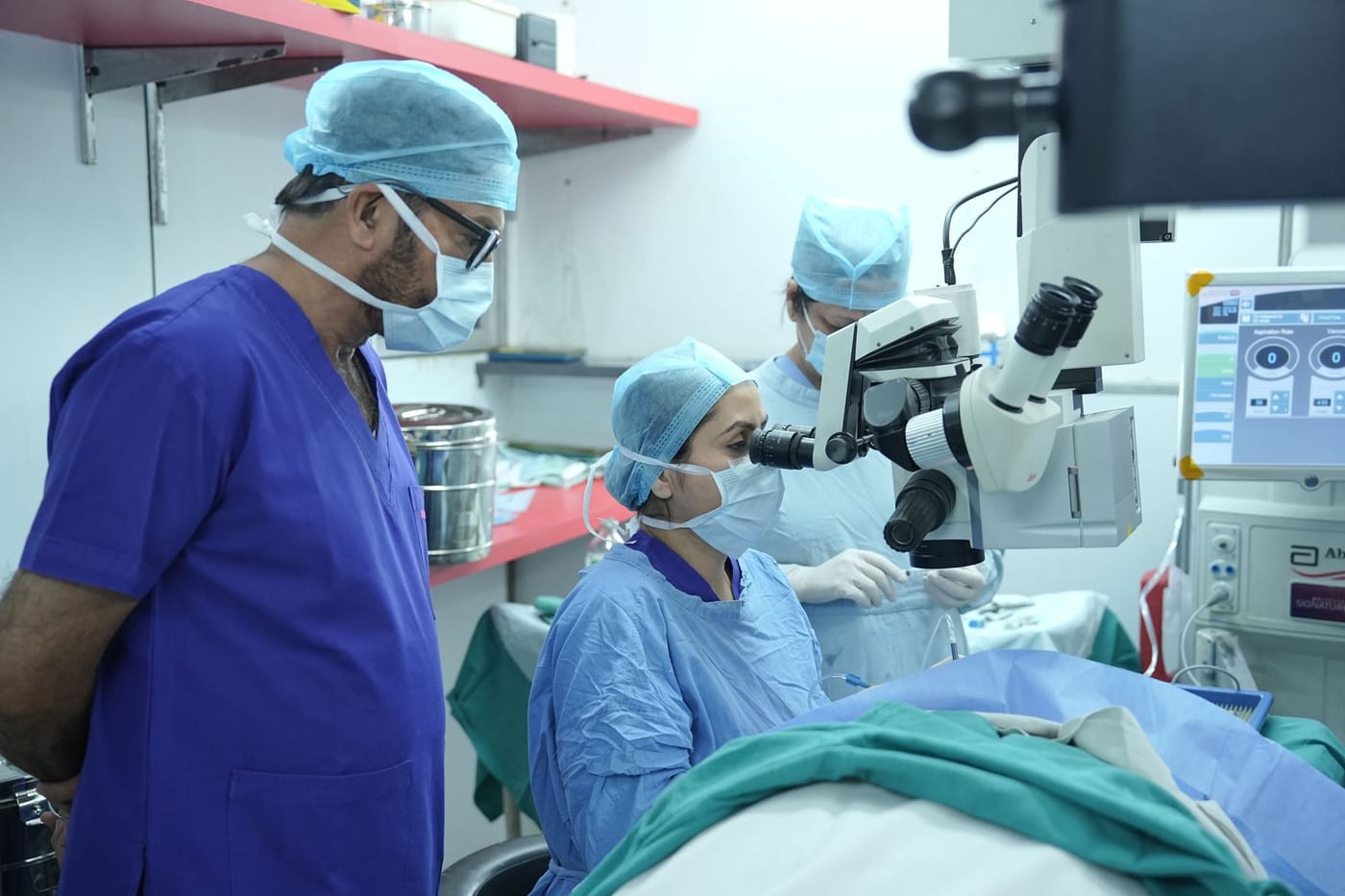
Is Laser Cataract Surgery Better Than Traditional Cataract Surgery?
Laser cataract surgery is not automatically better for every patient, but it can be useful in selected cases. A femtosecond laser can help create incisions, soften the cataract, make a precise capsulotomy, and assist with astigmatism treatment, but final results still depend on the surgeon, the eye, the lens implant, measurements, and healing. This article is educational and does not replace a complete eye examination by a medical professional.

§Read video transcript
Cataract surgery is one of the safest and most commonly performed operations in medicine. Now, a new form of the procedure is available that adds laser precision to the operation. This advanced method significantly improves the precision of several key steps performed during cataract surgery. By combining computer-controlled laser technology with advanced 3D imaging, laser cataract surgery is customized to meet your unique visual needs, resulting in a better visual outcome. Traditional cataract surgery uses a hand-held blade, to create incisions in the cornea, while laser cataract surgery uses a computer-controlled laser that precisely determine the size, shape, and location of the incisions. For patients with astigmatism, traditional cataract surgery uses a blade, to create arc-line incisions in the outer area of the cornea, to correct the uneven shape. With laser cataract surgery, these incisions can be created with the laser, at the precise length, depth, and location necessary. Before removing the cataract, an opening is made in the thin membrane that surrounds the lens. This step is called capsulorhexis. Studies have shown that performing a manual capsulorhexis with a bent or shaped needle by hand, is much less accurate than creating a capsulorhexis with a computer-controlled laser. The consistently precise laser-controlled capsulorhexis contributes to better lens positioning, and therefore more predictable visual results. This is especially important when implanting premium lenses, that are designed to reduce a patient’s need for glasses after surgery. Once the surgeon has access to the inner lens, it is then split into smaller pieces for removal. Traditional cataract surgery uses ultrasonic energy to divide the natural lens into segments. Laser cataract surgery is able to create these segments quicker, and with far less energy. With both traditional and laser cataract surgery, the smaller pieces of cataract are then removed from the eye, using an ultrasonic technique called phacoemulsification. However, with laser cataract surgery, the laser softens the lens, so less ultrasound energy is needed, to remove the pieces of cataract. This leads to less strain on the eyes delicate tissues, , including the cornea as well as the membrane and fibers that hold the intraocular lens in place. This artificial replacement lens is implanted into the capsular bag where the cataract used to be. In summary, using a laser for certain steps of the cataract procedure reduces the numbe of instruments needed for surgery, and increases the precision and accuracy of the procedure. Combined with 3D imaging technology, laser cataract surgery makes a very good procedure even better, and is a natural complement to the new generation of lens implants designed to reduce, or eliminate the need for glasses, after cataract surgery.
Key Takeaways
- Laser cataract surgery is a tool, not a guarantee.
- It may improve precision for certain surgical steps.
- Traditional cataract surgery also has excellent outcomes in skilled hands.
- Laser may help with some astigmatism-management plans.
- The best method depends on the patient’s eye and goals.
Why Patients Ask This Question
Patients see advertisements for laser cataract surgery and assume laser means superior. Sometimes laser assistance is valuable. Sometimes it adds cost without meaningful benefit for a particular patient. The honest answer requires nuance.
Many patients search for this because cataracts are common, gradual, and confusing. Vision may decline slowly enough that a person adapts without realizing how much clarity, contrast, night driving, or reading comfort has been lost. A clear answer helps patients know when to observe, when to schedule a comprehensive eye exam, and when cataract surgery deserves a serious discussion.
What This Means for Your Eyes
Traditional cataract surgery uses tiny incisions and ultrasound to remove the cloudy lens. Laser-assisted cataract surgery uses a femtosecond laser for selected steps before the lens is removed. The laser does not replace the surgeon, the operating microscope, the lens implant, or the need for careful planning.
The natural lens sits behind the pupil and helps focus light on the retina. When the lens becomes cloudy, light scatters before it reaches the retina. That scatter can create glare, halos, faded colors, blurry vision, and difficulty with driving at night. Cataract surgery replaces the cloudy natural lens with a clear artificial intraocular lens, also called an IOL.
Detailed Explanation
Laser-assisted cataract surgery may create a highly consistent capsulotomy, help fragment the lens, and create corneal incisions or arcuate incisions for astigmatism. Potential advantages include precision and reduced ultrasound energy in some cases. However, modern manual cataract surgery performed by an experienced surgeon is also highly effective. Outcomes are influenced heavily by ocular surface optimization, measurements, lens choice, surgical skill, astigmatism planning, retina health, and postoperative care. Laser assistance may not overcome macular degeneration, glaucoma, severe dry eye, irregular astigmatism, corneal disease, or unrealistic expectations. Cost and insurance coverage must also be discussed because some laser or refractive components may be elective.
The best cataract decision starts with matching the medical findings to the patient’s actual symptoms. Two patients can have cataracts that look similar under the microscope, but one may be bothered every day and the other may function well. Lighting needs, night driving, occupation, hobbies, eye dominance, astigmatism, dry eye, glaucoma, diabetic eye disease, macular degeneration, and prior LASIK all matter.
The simple answer is this: cataract care is not one-size-fits-all. A proper cataract evaluation includes the lens, cornea, retina, optic nerve, eye pressure, measurements for lens power, and a discussion of what the patient wants after surgery. The safest and most satisfying plan is the one based on both eye health and lifestyle.
When This May Be Serious
The question becomes serious when patients believe laser surgery eliminates risk. It does not. Laser-assisted procedures still have surgical risks, and some patients may not be ideal candidates due to small pupils, corneal opacity, positioning issues, or other factors.
Cataracts usually progress slowly, but not every blurry-vision complaint is a cataract. Sudden loss of vision, new flashes and floaters, a curtain or shadow in the vision, severe eye pain, marked redness, trauma, or nausea with eye pain should be treated urgently. Those symptoms can signal problems such as retinal detachment, infection, acute glaucoma, inflammation, or vascular disease.
How an Ophthalmologist Evaluates This
Evaluation includes cataract density, pupil dilation, corneal clarity, astigmatism pattern, ocular surface, lens choice, and surgical anatomy. The surgeon should explain which steps would be laser-assisted and why.
A cataract evaluation commonly includes visual acuity testing, refraction, slit-lamp examination, dilated retinal examination, intraocular pressure measurement, and often glare testing or contrast assessment. Before surgery, measurements such as optical biometry and corneal mapping help calculate the lens implant power and evaluate astigmatism. If the retina or optic nerve is a concern, OCT imaging or additional testing may be recommended.
Treatment Options
Treatment options include standard manual phacoemulsification, laser-assisted cataract surgery, toric IOL, arcuate incisions, premium lens planning, or standard monofocal surgery. The correct approach is the one that best serves the patient’s eye and goals.
Treatment should be individualized. For mild cataracts, stronger lighting, updated glasses, anti-glare strategies, and observation may be reasonable. Once cataracts interfere with daily activities, surgery is the only proven way to remove the cloudy lens. Lens implant choices may include monofocal, toric, extended-depth-of-focus, multifocal, or other advanced lens options depending on eye anatomy and goals.
What You Should Not Do
Do not assume laser means no glasses, no risk, or no surgeon skill. Do not pay for technology without understanding its role. Do not let marketing override medical judgment.
Do not assume that every vision symptom is “just cataract.” Do not rely on eye drops, supplements, or internet claims to dissolve a visually significant cataract. Do not choose a premium lens implant based only on advertising. Do not ignore dry eye, diabetic eye disease, macular degeneration, glaucoma, or corneal disease before making a cataract surgery plan.
When to Call May Eye Care Center
Patients should call May Eye Care Center in Hanover, PA when cataract symptoms interfere with reading, night driving, glare, work, hobbies, or confidence with daily activities. Patients from York, Adams County, South Central Pennsylvania, Carroll County Maryland, and surrounding areas often come to May Eye Care because they want a trusted ophthalmology center that explains the options clearly.
Regular eye exams are part of protecting vision for life. Your Vision is Our Focus, and that focus means more than surgery. It means a dependable destination for yearly eye health guidance, prevention, diagnosis, education, and advanced treatment when needed.
Bottom Line
Laser cataract surgery can be an excellent tool, but it is not automatically better for every patient. The best cataract surgery is the one planned precisely for the patient’s eye, lens goals, and medical risks.
A careful cataract evaluation is the right next step when vision is no longer matching your daily needs. The goal is not simply to “remove a cataract.” The goal is to protect eye health, improve useful vision when appropriate, and choose the safest lens and surgical plan for the individual patient.
Frequently asked questions
01Is laser cataract surgery safer?
It may add precision for certain steps, but it does not eliminate surgical risks.
02Is traditional cataract surgery outdated?
No. Traditional modern cataract surgery remains highly effective in experienced hands.
03Does laser surgery mean no glasses?
No. Glasses dependence depends more on lens choice, astigmatism, healing, and eye health.
04Does insurance cover laser cataract surgery?
Coverage varies, and refractive components may be elective.
05Who benefits from laser cataract surgery?
Selected patients may benefit based on anatomy, astigmatism plan, cataract density, and surgeon judgment.
06Should I choose laser or traditional?
Choose after your ophthalmologist explains what the laser would add for your specific eye.
This page also answers
- Why is Laser Cataract Surgery better than Traditional Cataract Surgery?
- What are the early symptoms of cataracts?
- When is cataract surgery necessary?
- Will I still need glasses after cataract surgery?
- Which lens implant is best for my lifestyle?
- What warning signs after cataract surgery require a call?
- When should this be checked urgently?
- What testing helps confirm the diagnosis?
- What treatments are available?
- What should patients avoid doing at home?
Medical sources
- aao.org/eye-health/diseases/what-is-cataract-surgery
- nei.nih.gov/eye-health-information/eye-conditions-and-diseases/cataracts/cataract-surgery
- mayoclinic.org/diseases-conditions/cataracts/diagnosis-treatment/drc-20353795
- ncbi.nlm.nih.gov/books/NBK559253
This article is for educational purposes only and is not a diagnosis, treatment plan, or substitute for an eye examination by a qualified eye doctor. Eye symptoms can have many causes, and some problems can threaten vision if they are not treated promptly. Do not diagnose or treat yourself based only on online information. If you have eye pain, sudden vision loss, flashes, new floaters, a curtain or shadow in your vision, double vision, chemical exposure, trauma, severe redness, light sensitivity, or any concerning eye symptom, seek urgent medical eye care or emergency care.
Schedule your eye exam at May Eye Care Center in Hanover, PA
Serving York, Gettysburg, Adams County, and northern Maryland (driving distances). Call (717) 637-1919 or explore more about cataract surgery at our practice.
Call (717) 637-1919