What Is a Cataract and Why Does It Happen?
A cataract is a clouding of the natural lens inside the eye. It most often happens from normal aging, but it can also be related to diabetes, eye injury, steroid medication, smoking, excess ultraviolet exposure, inflammation, or prior eye surgery. Cataracts are not a film growing over the eye; they are a change inside the lens itself. This article is educational and does not replace a complete eye examination by a medical professional.
§Read video transcript
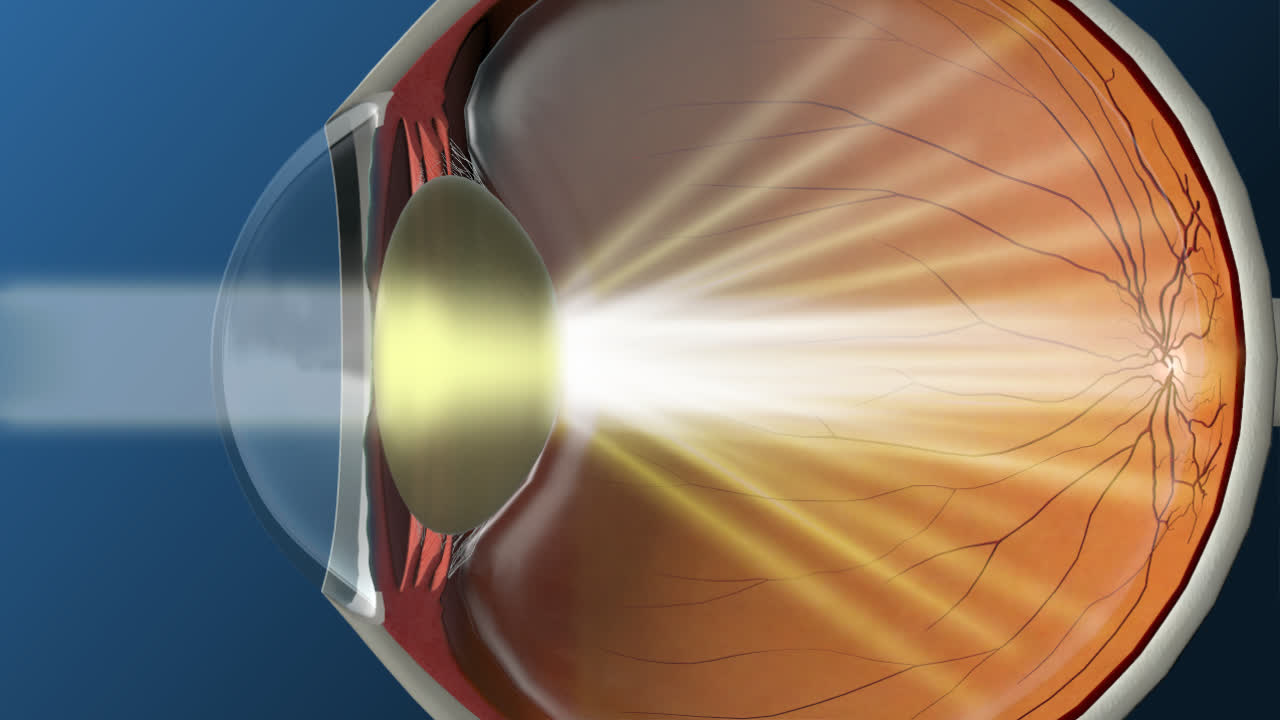
Cataracts are a leading cause of vision loss for people all around the world. While cataracts are a natural part of the aging process, they do not have to interfere with your lifestyle. A cataract is a clouding of the crystalline lens inside your eye. This lens is one of the key structures for focusing light at the back of your eye, where nerves send signals to your brain and you see an image. When the lens of your eye is clear and unclouded, it allows light to pass through. As your lens naturally clouds with age, it blocks some light from coming through. This causes vision to become yellowed and blurry, almost like looking through an amber filter or dirty glasses. This makes it difficult to see, especially at night, as glare around lights is a common symptom of cataracts. Because a cataract worsens over time, it can eventually keep you from fully enjoying the activities you love. Like most things related to aging, cataracts develop more slowly based on genetics and lifestyle choices, such as managing your stress level and making healthy dietary choices. Treating a cataract can open up a whole new world of possibilities when it comes to your vision. Talk to your doctor today about cataract surgery, which can help ensure your vision keeps up with your lifestyle.
Key Takeaways
- A cataract is a cloudy natural lens, not a growth on the surface of the eye.
- Most cataracts develop gradually with age.
- Cataracts can cause glare, blur, halos, faded colors, and night-driving difficulty.
- Surgery is the only proven way to remove a visually significant cataract.
- A complete eye exam is needed because other eye diseases can mimic cataract symptoms.
Why Patients Ask This Question
Patients often hear the word cataract before they understand what it actually means. Some people assume a cataract is a film that can be washed off or treated with drops. Others worry it is cancer, a retinal disease, or an emergency. The truth is simpler: the clear lens inside the eye slowly loses transparency, usually over many years.
Many patients search for this because cataracts are common, gradual, and confusing. Vision may decline slowly enough that a person adapts without realizing how much clarity, contrast, night driving, or reading comfort has been lost. A clear answer helps patients know when to observe, when to schedule a comprehensive eye exam, and when cataract surgery deserves a serious discussion.
What This Means for Your Eyes
A healthy lens is clear and flexible when we are young. With time, lens proteins and lens fibers change, and the lens becomes yellow, brown, or cloudy. That clouding prevents crisp light focus on the retina. The result is not only blur but also glare, reduced contrast, color dullness, and more difficulty seeing in dim or bright conditions.
The natural lens sits behind the pupil and helps focus light on the retina. When the lens becomes cloudy, light scatters before it reaches the retina. That scatter can create glare, halos, faded colors, blurry vision, and difficulty with driving at night. Cataract surgery replaces the cloudy natural lens with a clear artificial intraocular lens, also called an IOL.
Detailed Explanation
Cataracts can form in different parts of the lens. A nuclear cataract forms in the center and often causes yellowing or gradual blur. A cortical cataract can create spoke-like changes and glare. A posterior subcapsular cataract develops near the back of the lens and can cause disproportionate glare and reading difficulty, sometimes progressing faster than typical age-related cataracts. Some cataracts are congenital, traumatic, medication-related, or associated with systemic disease. Because there are different types, the exam matters. A slit-lamp examination allows the ophthalmologist to see exactly where the clouding is and whether it matches the patient’s symptoms.
The best cataract decision starts with matching the medical findings to the patient’s actual symptoms. Two patients can have cataracts that look similar under the microscope, but one may be bothered every day and the other may function well. Lighting needs, night driving, occupation, hobbies, eye dominance, astigmatism, dry eye, glaucoma, diabetic eye disease, macular degeneration, and prior LASIK all matter.
The simple answer is this: cataract care is not one-size-fits-all. A proper cataract evaluation includes the lens, cornea, retina, optic nerve, eye pressure, measurements for lens power, and a discussion of what the patient wants after surgery. The safest and most satisfying plan is the one based on both eye health and lifestyle.
When This May Be Serious
Cataracts themselves are usually not an emergency, but the symptom of blurry vision can be serious if it is sudden, one-sided, associated with pain, or accompanied by flashes, floaters, a curtain, double vision, or neurologic symptoms. Those are not routine cataract symptoms and need urgent evaluation.
Cataracts usually progress slowly, but not every blurry-vision complaint is a cataract. Sudden loss of vision, new flashes and floaters, a curtain or shadow in the vision, severe eye pain, marked redness, trauma, or nausea with eye pain should be treated urgently. Those symptoms can signal problems such as retinal detachment, infection, acute glaucoma, inflammation, or vascular disease.
How an Ophthalmologist Evaluates This
The ophthalmologist checks vision, glare, refraction, eye pressure, cornea, lens, optic nerve, and retina. A dilated exam is essential because a patient can have cataracts and also have macular degeneration, diabetic retinopathy, glaucoma, or corneal disease.
A cataract evaluation commonly includes visual acuity testing, refraction, slit-lamp examination, dilated retinal examination, intraocular pressure measurement, and often glare testing or contrast assessment. Before surgery, measurements such as optical biometry and corneal mapping help calculate the lens implant power and evaluate astigmatism. If the retina or optic nerve is a concern, OCT imaging or additional testing may be recommended.
Treatment Options
Mild cataracts may be monitored with updated glasses and better lighting. Surgery becomes appropriate when the cataract interferes with daily function or blocks necessary examination or treatment of the retina. The surgical plan includes selecting an intraocular lens based on measurements, eye health, and the patient’s visual goals.
Treatment should be individualized. For mild cataracts, stronger lighting, updated glasses, anti-glare strategies, and observation may be reasonable. Once cataracts interfere with daily activities, surgery is the only proven way to remove the cloudy lens. Lens implant choices may include monofocal, toric, extended-depth-of-focus, multifocal, or other advanced lens options depending on eye anatomy and goals.
What You Should Not Do
Do not buy into claims that drops can reverse a visually significant cataract. Do not assume all blur is cataract. Do not wait indefinitely if night driving becomes unsafe. Do not choose surgery until you understand your lens implant options and any other eye conditions that may limit the result.
Do not assume that every vision symptom is “just cataract.” Do not rely on eye drops, supplements, or internet claims to dissolve a visually significant cataract. Do not choose a premium lens implant based only on advertising. Do not ignore dry eye, diabetic eye disease, macular degeneration, glaucoma, or corneal disease before making a cataract surgery plan.
When to Call May Eye Care Center
Patients should call May Eye Care Center in Hanover, PA when cataract symptoms interfere with reading, night driving, glare, work, hobbies, or confidence with daily activities. Patients from York, Adams County, South Central Pennsylvania, Carroll County Maryland, and surrounding areas often come to May Eye Care because they want a trusted ophthalmology center that explains the options clearly.
Regular eye exams are part of protecting vision for life. Your Vision is Our Focus, and that focus means more than surgery. It means a dependable destination for yearly eye health guidance, prevention, diagnosis, education, and advanced treatment when needed.
Bottom Line
A cataract is a cloudy natural lens inside the eye, most often related to aging. The right question is not whether a cataract exists, but whether it is responsible for the patient’s symptoms and whether treatment would improve useful daily vision.
A careful cataract evaluation is the right next step when vision is no longer matching your daily needs. The goal is not simply to “remove a cataract.” The goal is to protect eye health, improve useful vision when appropriate, and choose the safest lens and surgical plan for the individual patient.
Frequently asked questions
01Are cataracts part of normal aging?
Yes. Most cataracts are age-related, although cataracts can also occur after trauma, steroid use, inflammation, or in association with certain diseases.
02Can cataracts spread from one eye to the other?
No. Cataracts do not spread, but both eyes often develop age-related lens clouding over time.
03Can cataracts cause blindness?
Untreated advanced cataracts can severely reduce vision, but modern cataract surgery can usually restore clarity when the rest of the eye is healthy.
04Do cataracts hurt?
Typical age-related cataracts do not cause eye pain. Pain, redness, or sudden vision loss requires urgent evaluation.
05Can glasses fix cataracts?
New glasses may help early cataracts, but glasses cannot remove lens clouding once it becomes visually significant.
06When should I get checked?
Schedule a comprehensive eye exam when blur, glare, halos, night driving, or reading problems begin affecting daily life.
This page also answers
- What is a Cataract?
- What are the early symptoms of cataracts?
- When is cataract surgery necessary?
- Will I still need glasses after cataract surgery?
- Which lens implant is best for my lifestyle?
- What warning signs after cataract surgery require a call?
- When should this be checked urgently?
- What testing helps confirm the diagnosis?
- What treatments are available?
- What should patients avoid doing at home?
Medical sources
- nei.nih.gov/eye-health-information/eye-conditions-and-diseases/cataracts
- nei.nih.gov/eye-health-information/eye-conditions-and-diseases/cataracts/types-cataract
- aao.org/eye-health/diseases/what-are-cataracts
- mayoclinic.org/diseases-conditions/cataracts/diagnosis-treatment/drc-20353795
This article is for educational purposes only and is not a diagnosis, treatment plan, or substitute for an eye examination by a qualified eye doctor. Eye symptoms can have many causes, and some problems can threaten vision if they are not treated promptly. Do not diagnose or treat yourself based only on online information. If you have eye pain, sudden vision loss, flashes, new floaters, a curtain or shadow in your vision, double vision, chemical exposure, trauma, severe redness, light sensitivity, or any concerning eye symptom, seek urgent medical eye care or emergency care.
Schedule your eye exam at May Eye Care Center in Hanover, PA
Serving York, Gettysburg, Adams County, and northern Maryland (driving distances). Call (717) 637-1919 or explore more about cataract surgery at our practice.
Call (717) 637-1919