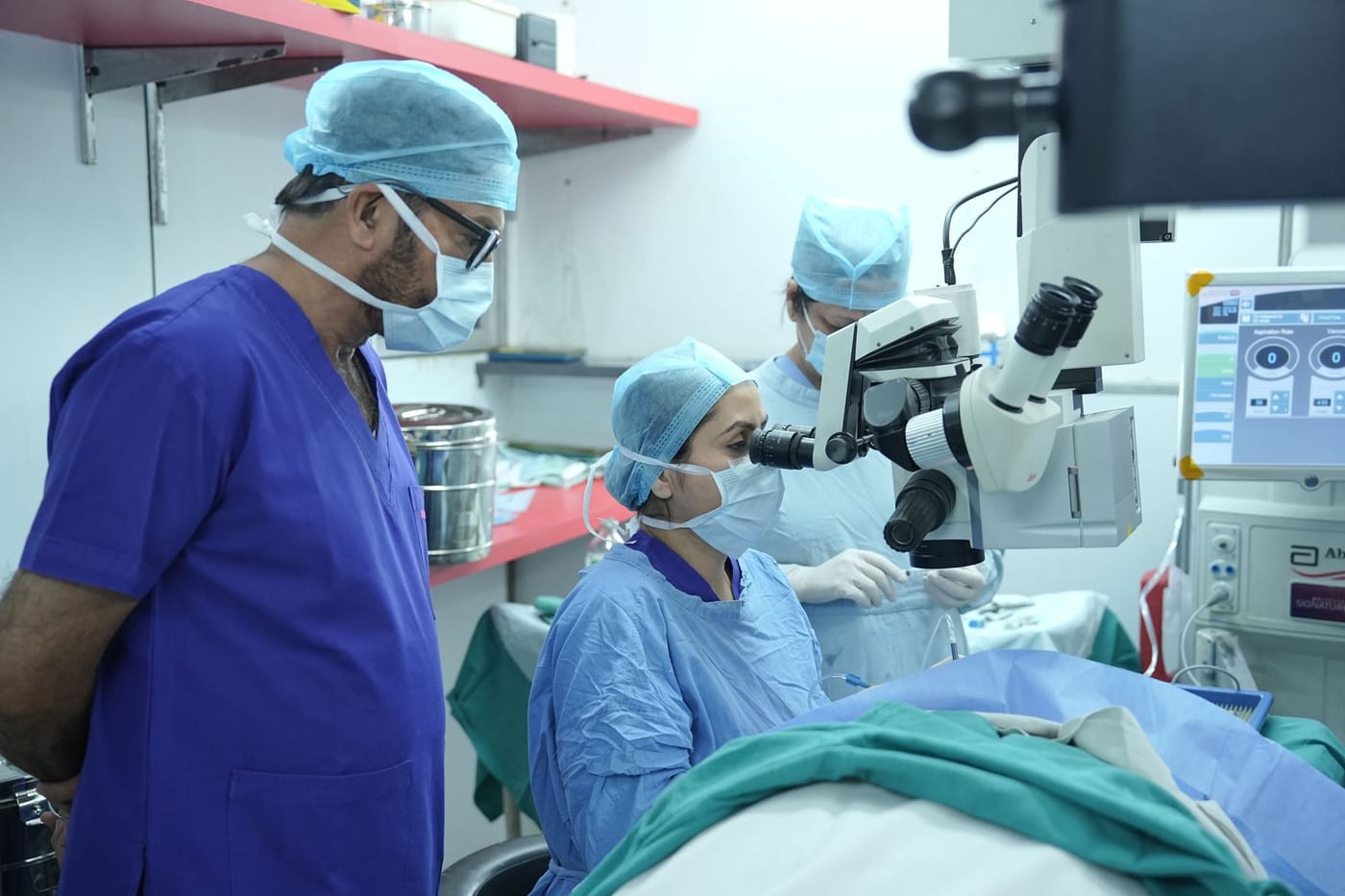
What is a Nuclear Cataract?
A nuclear cataract — the most common type — forms in the nucleus, the central core of the lens, which gradually hardens and yellows with age. Vision typically dims slowly over years: distance vision blurs, colors fade, and night driving becomes harder. Some people briefly read better without glasses as the lens changes (“second sight”) before vision declines again. When it starts interfering with daily life, surgery to replace the clouded lens with a clear implant is the definitive treatment.
§Read video transcript
A nuclear cataract is the most common type of cataract. This type of cataract begins with a gradual hardening and yellowing of the center of the lens, called the nucleus. This hardening gradually expands to the other layers of the lens. Nuclear cataracts cause light to scatter when it passes through the lens which decreases the amount of light reaching the retina. If left untreated, these symptoms will increase in severity, eventually leading to severe vision loss. Cataract surgery is a commonly performed procedure which will restore your sight. If you have questions about nuclear cataracts or cataract surgery, speak with your eye care professional today.
Medical sources
- aao.org/eye-health/diseases/what-are-cataracts
- nei.nih.gov/eye-health-information/eye-conditions-and-diseases/cataracts
This page and video are for general patient education and are not a substitute for a medical examination, diagnosis, or treatment. Eye conditions vary by individual. For advice about your eyes, schedule an evaluation with May Eye Care Center. In an emergency, call 911.
Schedule your eye exam at May Eye Care Center in Hanover, PA
Serving York, Gettysburg, Adams County, and northern Maryland (driving distances). Call (717) 637-1919 or explore more about cataract surgery at our practice.
Call (717) 637-1919