What Is YAG Laser After Cataract Surgery?
YAG laser after cataract surgery is a laser treatment called posterior capsulotomy. It is used when the clear capsule behind the lens implant becomes cloudy, causing posterior capsule opacification. The laser creates a small opening in the cloudy capsule so light can pass more clearly to the retina. This article is educational and does not replace a complete eye examination by a medical professional.
§Read video transcript
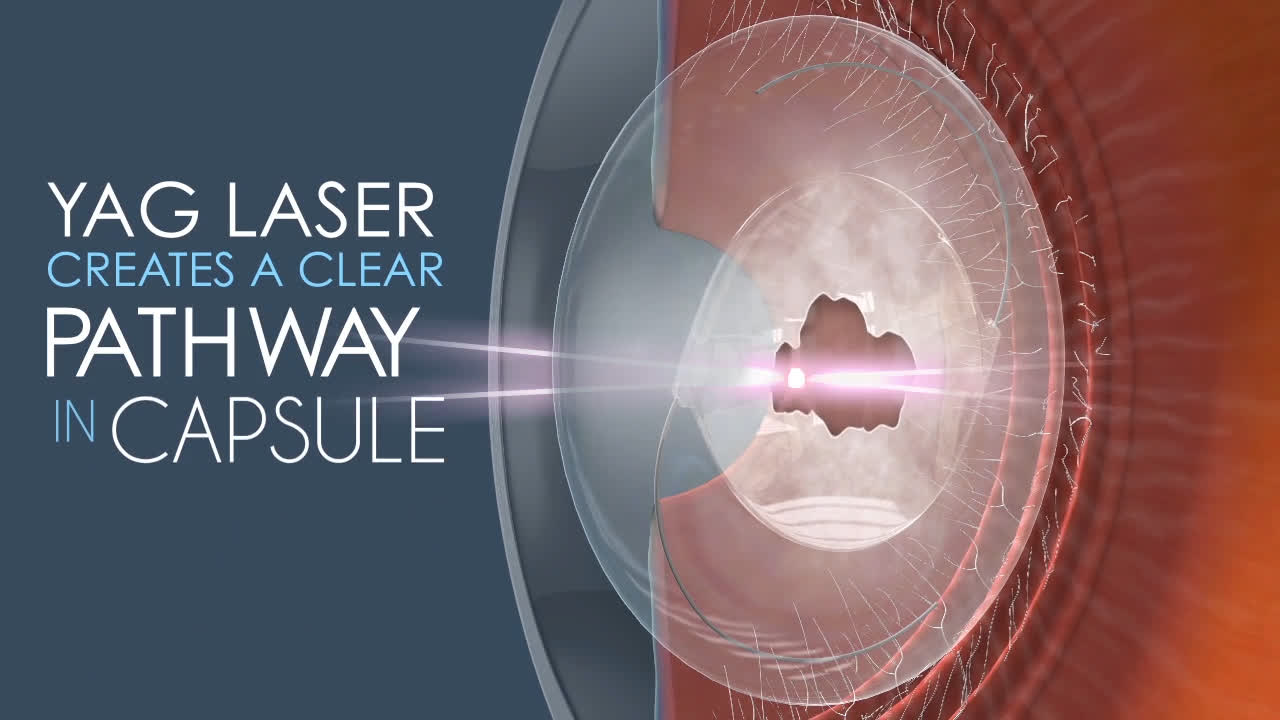
Sometimes, months or even years after cataract and lens replacement surgery, your vision may seem to fade. This is often because of something called posterior capsular clouding. When you had your cataract and lens implant surgery, an Intraocular lens (or IOL) was implanted within the lens capsule. The lens capsule is a thin, elastic, and transparent envelope inside your eye, that once held your natural lens - and now holds the IOL in place. Within a few weeks after lens implant surgery, the capsule shrinks and seals itself to the IOL which is what holds it firmly in place. As time goes by, the capsule may become cloudy. This often occurs sooner with premium IOLs, but patients with any IOL may develop it as well. This is not a cataract "coming back", but a very common side-effect following lens replacement. The typical solution is a YAG laser capsulotomy. The YAG laser will make an opening in the center of the posterior capsule about the size of your pupil, creating a clear visual pathway. This procedure is usually not done at the time of lens implant surgery because it could interfere with the implant’s position. Once the YAG procedure has been performed, you should see a very quick improvement in your overall vision. Fortunately, this is a one-time event and extremely unlikely to ever need to be repeated in the future. Talk to us if you have questions about the YAG laser procedure.
Key Takeaways
- YAG laser treats posterior capsule opacification, not a new cataract.
- The treatment is usually quick and performed in the office.
- It may improve cloudy or hazy vision caused by PCO.
- An exam is needed to confirm PCO is the true cause.
- Possible risks include pressure rise, inflammation, floaters, lens marks, or rare retinal complications.
Why Patients Ask This Question
Patients often become confused when vision gets cloudy months or years after cataract surgery. They may be told they need “a laser” but not understand why. The key is that YAG treats the capsule behind the implant, not the removed cataract.
Many patients search for this because cataracts are common, gradual, and confusing. Vision may decline slowly enough that a person adapts without realizing how much clarity, contrast, night driving, or reading comfort has been lost. A clear answer helps patients know when to observe, when to schedule a comprehensive eye exam, and when cataract surgery deserves a serious discussion.
What This Means for Your Eyes
The lens implant sits inside a thin natural capsule. Over time, the back part of that capsule can become hazy. The IOL itself is usually clear. A YAG capsulotomy opens the hazy membrane behind the implant, improving the path of light to the retina.
The natural lens sits behind the pupil and helps focus light on the retina. When the lens becomes cloudy, light scatters before it reaches the retina. That scatter can create glare, halos, faded colors, blurry vision, and difficulty with driving at night. Cataract surgery replaces the cloudy natural lens with a clear artificial intraocular lens, also called an IOL.
Detailed Explanation
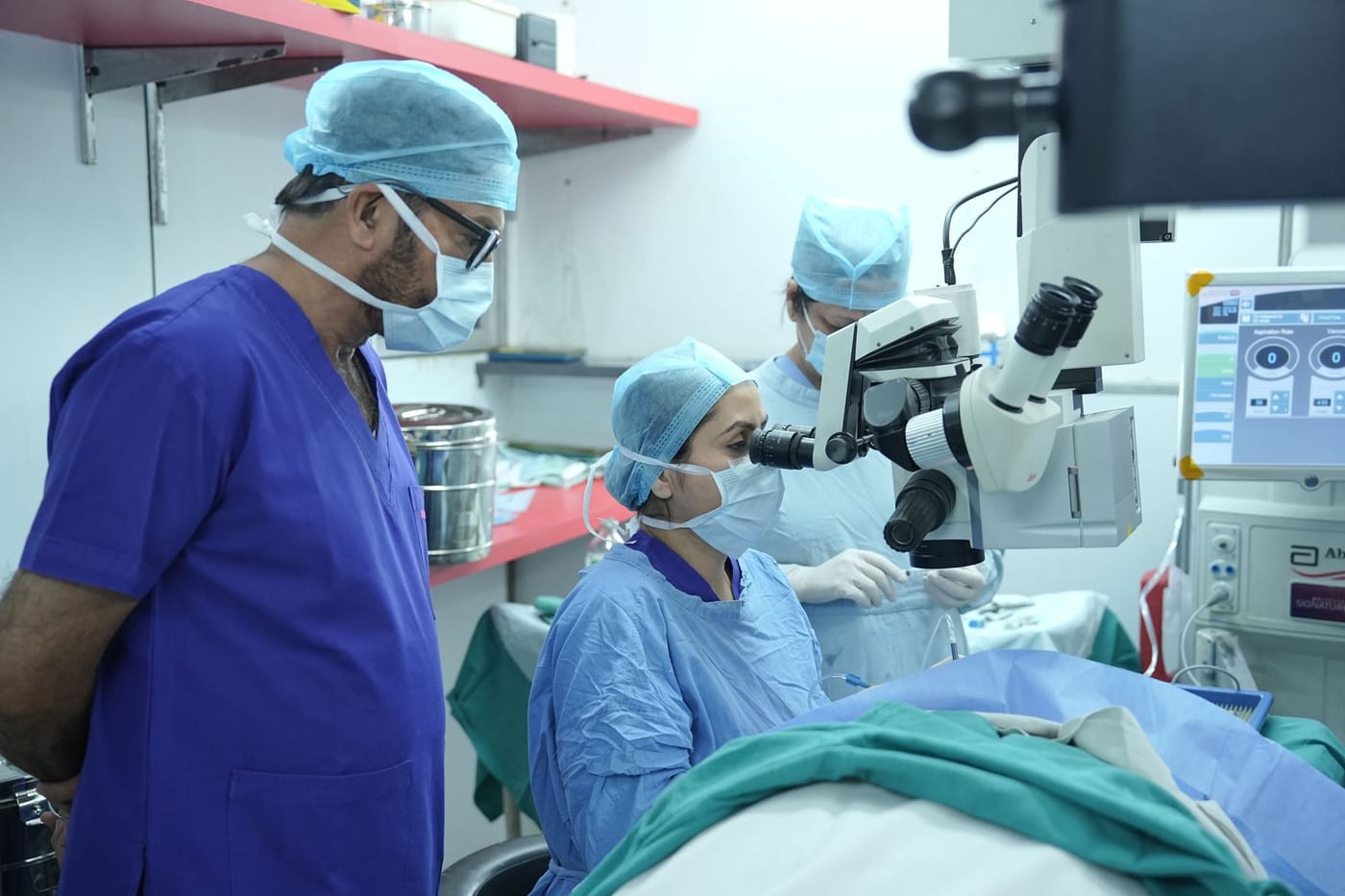
During YAG capsulotomy, the patient sits at a laser microscope similar to an exam slit lamp. The eye is usually numbed with drops. The laser makes a central opening in the posterior capsule. The procedure is usually brief. Patients may notice floaters afterward, and pressure may be checked. Vision may improve quickly, but response depends on whether PCO was the limiting issue. Once the capsule is opened, future lens exchange can become more complex, so the decision should be thoughtful, especially in patients unhappy with a premium lens or with residual refractive issues.
The best cataract decision starts with matching the medical findings to the patient’s actual symptoms. Two patients can have cataracts that look similar under the microscope, but one may be bothered every day and the other may function well. Lighting needs, night driving, occupation, hobbies, eye dominance, astigmatism, dry eye, glaucoma, diabetic eye disease, macular degeneration, and prior LASIK all matter.
The simple answer is this: cataract care is not one-size-fits-all. A proper cataract evaluation includes the lens, cornea, retina, optic nerve, eye pressure, measurements for lens power, and a discussion of what the patient wants after surgery. The safest and most satisfying plan is the one based on both eye health and lifestyle.
When This May Be Serious
YAG-related concerns include sudden new floaters, flashes, curtain, pain, or significant vision loss after treatment. These should be reported promptly. Patients at higher retinal risk may need careful dilated evaluation.
Cataracts usually progress slowly, but not every blurry-vision complaint is a cataract. Sudden loss of vision, new flashes and floaters, a curtain or shadow in the vision, severe eye pain, marked redness, trauma, or nausea with eye pain should be treated urgently. Those symptoms can signal problems such as retinal detachment, infection, acute glaucoma, inflammation, or vascular disease.
How an Ophthalmologist Evaluates This
Evaluation includes visual acuity, slit-lamp exam, assessment of the capsule, IOL position, eye pressure, and retinal exam. OCT may be used if the macula could be causing blur.
A cataract evaluation commonly includes visual acuity testing, refraction, slit-lamp examination, dilated retinal examination, intraocular pressure measurement, and often glare testing or contrast assessment. Before surgery, measurements such as optical biometry and corneal mapping help calculate the lens implant power and evaluate astigmatism. If the retina or optic nerve is a concern, OCT imaging or additional testing may be recommended.
Treatment Options
Treatment is observation if PCO is mild and not visually significant, or YAG posterior capsulotomy if PCO is affecting vision. Other causes of blur require different treatment.
Treatment should be individualized. For mild cataracts, stronger lighting, updated glasses, anti-glare strategies, and observation may be reasonable. Once cataracts interfere with daily activities, surgery is the only proven way to remove the cloudy lens. Lens implant choices may include monofocal, toric, extended-depth-of-focus, multifocal, or other advanced lens options depending on eye anatomy and goals.
What You Should Not Do
Do not assume all cloudy vision after cataract surgery needs YAG. Do not postpone evaluation if blur is sudden or associated with retinal symptoms. Do not undergo YAG until lens position, retina health, and the cause of blur are understood.
Do not assume that every vision symptom is “just cataract.” Do not rely on eye drops, supplements, or internet claims to dissolve a visually significant cataract. Do not choose a premium lens implant based only on advertising. Do not ignore dry eye, diabetic eye disease, macular degeneration, glaucoma, or corneal disease before making a cataract surgery plan.
When to Call May Eye Care Center
Patients should call May Eye Care Center in Hanover, PA when cataract symptoms interfere with reading, night driving, glare, work, hobbies, or confidence with daily activities. Patients from York, Adams County, South Central Pennsylvania, Carroll County Maryland, and surrounding areas often come to May Eye Care because they want a trusted ophthalmology center that explains the options clearly.
Regular eye exams are part of protecting vision for life. Your Vision is Our Focus, and that focus means more than surgery. It means a dependable destination for yearly eye health guidance, prevention, diagnosis, education, and advanced treatment when needed.
Bottom Line
YAG laser after cataract surgery treats posterior capsule opacification, a cloudy membrane behind the lens implant. It is often effective when PCO is the true cause, but an eye exam must confirm the diagnosis first.
A careful cataract evaluation is the right next step when vision is no longer matching your daily needs. The goal is not simply to “remove a cataract.” The goal is to protect eye health, improve useful vision when appropriate, and choose the safest lens and surgical plan for the individual patient.
Frequently asked questions
01Is YAG laser the same as cataract surgery?
No. Cataract surgery removes the cloudy lens; YAG opens a cloudy posterior capsule after surgery.
02Does YAG hurt?
It is usually not painful and is performed with the patient sitting at a laser microscope.
03Can PCO come back after YAG?
Once a proper opening is made, the treated central capsule usually does not cloud in the same way.
04How fast does vision improve?
Many patients improve quickly, but timing varies and depends on other eye health.
05Are there risks?
Yes. Risks can include pressure elevation, inflammation, floaters, lens marks, and rare retinal complications.
06Do I need drops afterward?
Some surgeons prescribe drops; follow the specific instructions you are given.
This page also answers
- What is a YAG Laser Capsulotomy?
- What are the early symptoms of cataracts?
- When is cataract surgery necessary?
- Will I still need glasses after cataract surgery?
- Which lens implant is best for my lifestyle?
- What warning signs after cataract surgery require a call?
- When should this be checked urgently?
- What testing helps confirm the diagnosis?
- What treatments are available?
- What should patients avoid doing at home?
Medical sources
- aao.org/eye-health/treatments/what-is-posterior-capsulotomy
- aao.org/eye-health/diseases/what-is-cataract-surgery
- nei.nih.gov/eye-health-information/eye-conditions-and-diseases/cataracts/cataract-surgery
- aao.org/eye-health/tips-prevention/side-effects-cataract-surgery-complications-cope
This article is for educational purposes only and is not a diagnosis, treatment plan, or substitute for an eye examination by a qualified eye doctor. Eye symptoms can have many causes, and some problems can threaten vision if they are not treated promptly. Do not diagnose or treat yourself based only on online information. If you have eye pain, sudden vision loss, flashes, new floaters, a curtain or shadow in your vision, double vision, chemical exposure, trauma, severe redness, light sensitivity, or any concerning eye symptom, seek urgent medical eye care or emergency care.
Schedule your eye exam at May Eye Care Center in Hanover, PA
Serving York, Gettysburg, Adams County, and northern Maryland (driving distances). Call (717) 637-1919 or explore more about cataract surgery at our practice.
Call (717) 637-1919