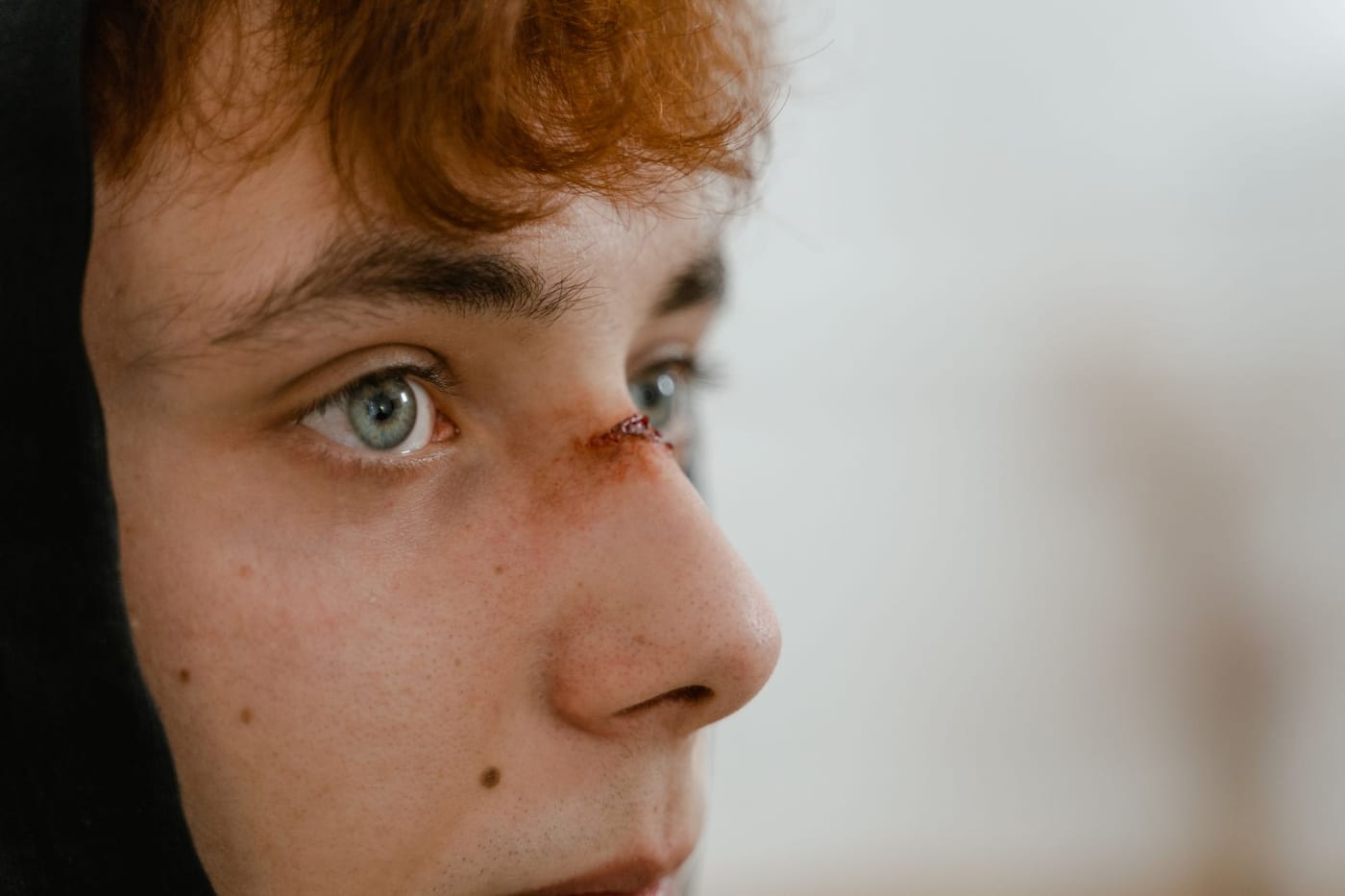
Can a Black Eye Damage My Vision?
A black eye by itself, bruising and swelling of the eyelids and skin around the eye, does not damage vision; it is skin and soft tissue, and the discoloration fades over one to two weeks. The concern is what the same blow may have done to the eyeball behind that bruise. A hit hard enough to blacken an eye can also cause bleeding inside the eye, a retinal tear or detachment, or an orbital fracture. So the bruise is harmless, but any change in vision, deep eye pain, double vision, blood inside the colored part of the eye, or new floaters after the injury needs to be checked the same day.
Key Takeaways
- The visible black eye is bruised skin and eyelid; it heals on its own and does not by itself harm sight.
- The real question is whether the blow also injured the eyeball or the bones of the socket.
- Warning signs: blurred or lost vision, double vision, deep eye pain, light sensitivity, or blood inside the eye.
- New flashes, floaters, or a shadow or curtain in your vision can signal a retinal tear or detachment.
- Double vision or an eye that will not move fully, especially with a numb cheek, suggests an orbital (blowout) fracture.
- If the only problem is bruising and swelling, cold compresses help; if any vision symptom appears, get an eye exam promptly.
Why Patients Ask This Question
A dramatic purple, swollen eye after being hit looks frightening, and people assume something inside must be damaged. They want to know whether the black eye itself threatens their sight, and how to tell an ordinary bruise, which just needs time, from a blow that also injured the eyeball and needs a doctor.
What This Means for Your Eyes
A black eye is periorbital bruising: small vessels under the thin skin around the eye break and leak, producing swelling and the classic purple-to-yellow color as it heals. That affects the skin and lids, not the optical parts of the eye, so vision is not harmed by the bruise itself.
What determines whether vision is at risk is the force behind the blow. The eye is a fluid-filled ball in a bony socket, and a hard impact can suddenly raise the pressure inside it. That can tear tiny vessels in the front chamber (a hyphema), stress the retina and cause a tear or detachment, bruise the retina, or fracture the thin floor of the socket. These deeper injuries, not the bruise, are what can affect sight, and they may be present even when the skin bruise looks like any other.
Detailed Explanation
Blunt trauma transmits force through the eyeball. In the front, it can rupture iris vessels and cause a hyphema, blood settling in the anterior chamber, which brings pain, light sensitivity, and blurred vision, and carries a risk of pressure spikes and rebleeding. It can also cause traumatic iritis, an inflammation that produces a deep ache and light sensitivity a day or two later.
At the back, the same force can cause commotio retinae (temporary bruising of the retina), a retinal tear, or a detachment, which produces flashes, a shower of floaters, or a curtain across the vision. If the eye is driven back hard, the thin orbital floor can crack (a blowout fracture), sometimes trapping an eye muscle and causing double vision on looking up, along with numbness of the cheek and upper lip. This is why an eye that took enough force to bruise deserves attention to the structures behind the bruise, not just the skin.
When This May Be Serious
Get an eye examination promptly, or go to an emergency room, if after the blow you notice any of the following:
- Blurred vision, decreased vision, or vision that is getting worse.
- Double vision, or an eye that cannot move fully in one direction.
- Blood visible in the colored part of the eye (behind the cornea).
- New flashes of light, a shower of floaters, or a shadow or curtain in your side vision.
- Deep eye pain or marked light sensitivity, as opposed to just tenderness of the bruised skin.
- Numbness of the cheek, or a sunken or bulging eye, suggesting a fracture.
How an Ophthalmologist Evaluates This
The doctor measures vision and checks the pupils, then examines the front of the eye at the slit-lamp for a hyphema, iritis, or damage to the iris and lens. Eye pressure is measured, since blunt trauma can raise or lower it. The pupil is dilated to inspect the retina carefully for tears, detachment, or bruising, with special attention to the far periphery where tears hide. If the mechanism or exam suggests a broken socket, a CT scan of the orbit is ordered to look for a fracture and any trapped muscle; eye movements and cheek sensation are tested for the same reason.
Treatment Options
A pure black eye needs only cold compresses for the first day or two, then warm compresses, head elevation, and time; it fades on its own. If the exam finds a hyphema, treatment is rest, a protective shield, avoiding blood thinners and strenuous activity, and close monitoring of eye pressure. Traumatic iritis is treated with anti-inflammatory drops and a dilating drop for comfort. A retinal tear is sealed with laser; a detachment is repaired surgically. An orbital fracture that traps a muscle or causes a sunken eye may need surgical repair, while many fractures without those features are simply watched.
What You Should Not Do
- Do not press on or rub the eye, and do not push on the swelling to 'check' it.
- Do not blow your nose hard if you may have an orbital fracture; it can force air into the tissues around the eye.
- Do not take aspirin or other blood thinners for the pain unless a doctor approves; they raise the risk of rebleeding.
- Do not resume sports or heavy activity until an eye doctor confirms the eyeball is uninjured.
- Do not assume the eye is fine just because vision seems normal on the first day; some tears and detachments appear later.
When to Call May Eye Care Center
If you have only bruising and swelling with completely normal vision, home care is usually enough, though a check after a hard blow is reasonable, especially before returning to sports. Any vision change, double vision, deep eye pain, blood in the eye, or new flashes and floaters means an urgent visit the same day, or the emergency room if care is not otherwise available. Patients in the Hanover area can reach May Eye Care Center to arrange a prompt look.
Bottom Line
The black eye itself is a harmless bruise that heals on its own, but the blow that caused it can injure the eyeball, so any change in vision, deep eye pain, double vision, blood in the eye, or new floaters after the hit needs a prompt eye exam.
This page also answers
- When should I go to the ER for an eye injury?
- What should I do before seeing an eye doctor after eye trauma?
- Can an eye injury cause permanent vision loss?
- How quickly should chemical eye exposure be treated?
- What warning signs after eye injury are dangerous?
- When should this be checked urgently?
- What testing helps confirm the diagnosis?
- What treatments are available?
- What should patients avoid doing at home?
Medical sources
This article is for educational purposes only and is not a diagnosis, treatment plan, or substitute for an eye examination by a qualified eye doctor. Eye symptoms can have many causes, and some problems can threaten vision if they are not treated promptly. Do not diagnose or treat yourself based only on online information. If you have eye pain, sudden vision loss, flashes, new floaters, a curtain or shadow in your vision, double vision, chemical exposure, trauma, severe redness, light sensitivity, or any concerning eye symptom, seek urgent medical eye care or emergency care.
Schedule your eye exam at May Eye Care Center in Hanover, PA
Serving York, Gettysburg, Adams County, and northern Maryland (driving distances). Call (717) 637-1919 or explore more about eye emergency at our practice.
Call (717) 637-1919