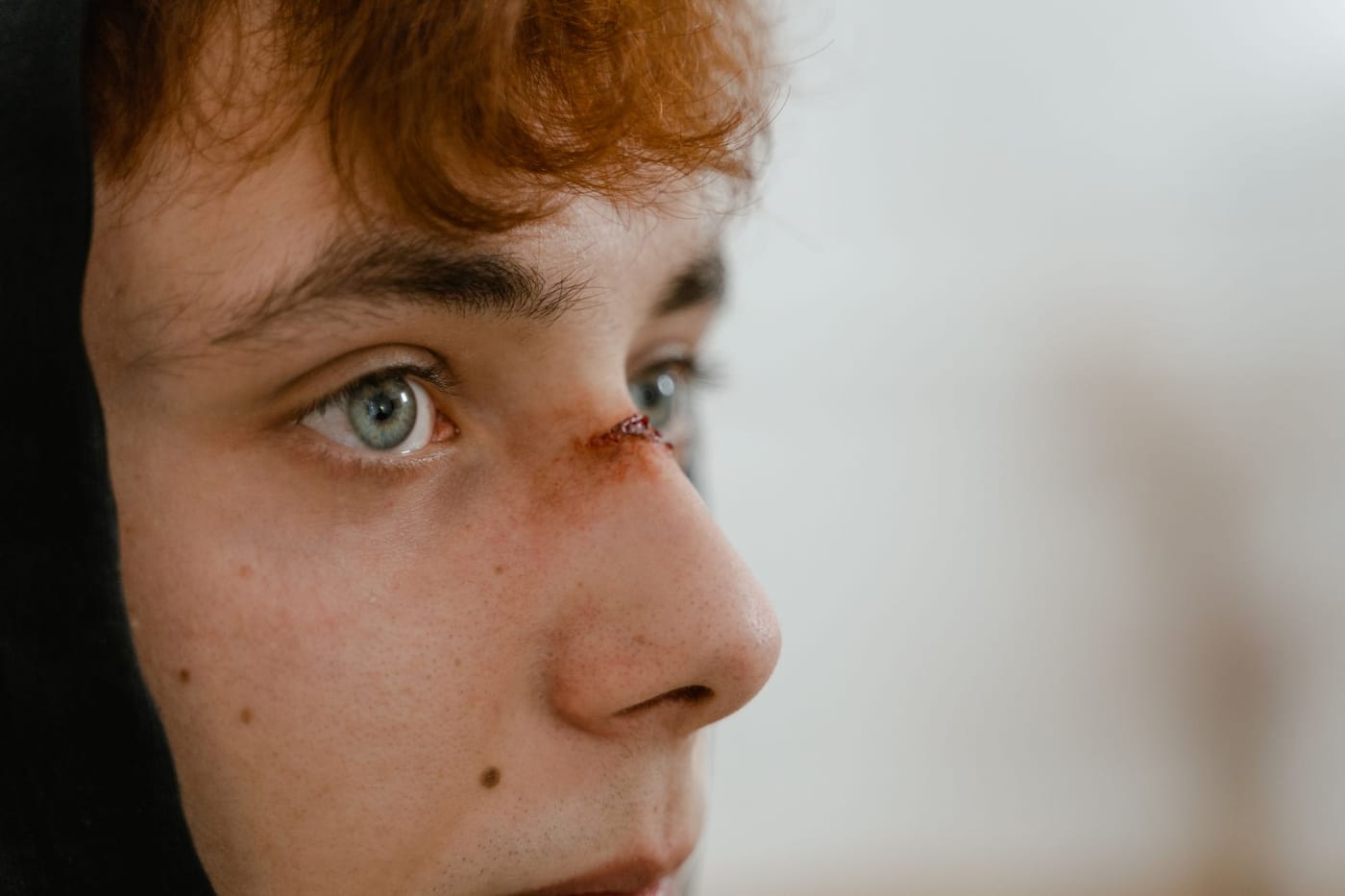
What Is Traumatic Iritis?
Traumatic iritis is inflammation of the iris and the fluid just behind the cornea (the anterior chamber) that develops after a blow to the eye, usually within a day or two. It causes a deep, aching pain, redness concentrated around the colored part of the eye, marked light sensitivity, and often blurred vision and tearing. It is not something to wait out: it needs an eye exam to confirm the diagnosis, to rule out more serious trauma such as a hyphema or retinal tear, and to start anti-inflammatory treatment. Most cases settle over one to a few weeks with the right drops, but the eye should be checked promptly and pressure monitored.
Key Takeaways
- Traumatic iritis is post-injury inflammation inside the front of the eye, appearing a day or two after a blow.
- Hallmarks are deep aching pain, redness around the iris, strong light sensitivity, and blurred vision.
- Light shone in the uninjured eye can still hurt the injured one, a classic feature.
- It needs an exam to confirm it and to rule out a hyphema, raised pressure, or a retinal injury from the same trauma.
- Treatment is anti-inflammatory drops plus a dilating drop for comfort, and monitoring of eye pressure.
- Red flags for more urgent care: worsening pain or vision, blood in the eye, or a shadow or flashes in your vision.
Why Patients Ask This Question
A day or two after getting hit in the eye, when they expected the soreness to be improving, patients instead develop a deep ache and find bright light painful enough to want to stay in the dark. They worry that something is getting worse rather than better, and they want to know what this delayed pain and light sensitivity means.
What This Means for Your Eyes
The iris is the colored ring that opens and closes the pupil, served by fine vessels and muscles. A blunt injury bruises this tissue, and in response the eye mounts an inflammatory reaction: white blood cells and protein leak into the clear fluid of the anterior chamber. That inflammation irritates the tissue and makes the iris muscles go into a painful spasm, which is why light striking the eye hurts.
Because the pupils react together, light shone in the good eye still constricts the injured pupil and provokes pain, a distinctive feature of iritis. The blurred vision comes from the inflammatory haze in the fluid and from the light sensitivity itself. Traumatic iritis usually resolves, but while active it can raise or lower eye pressure and the inflammation can cause the iris to stick to the lens, so it is treated and watched rather than left to run its course.
Detailed Explanation
Traumatic iritis, also called traumatic anterior uveitis, typically follows blunt trauma, a ball, fist, elbow, or fall, and appears within about 24 to 72 hours as the inflammatory response builds. The pain is deep and aching rather than the surface stinging of a scratch, and the redness is most intense in a ring around the cornea (ciliary flush). Light sensitivity is often severe, and vision is mildly to moderately blurred.
On examination, the tell is inflammatory cells floating in the anterior chamber. The same blow can cause other injuries, which is why the diagnosis is never made in isolation: a hyphema, a pressure spike, a traumatic cataract, angle damage, or a retinal tear can all coexist. Most traumatic iritis improves within one to three weeks with treatment. Complications are uncommon but include raised pressure or adhesions (synechiae) where the inflamed iris sticks to the lens, which is one reason a dilating drop is used to keep the pupil moving.
When This May Be Serious
Traumatic iritis itself warrants prompt evaluation. Seek care more urgently, or go to an ER, if along with the ache and light sensitivity you have:
- Vision that is significantly reduced or getting worse.
- Blood visible in the colored part of the eye (a hyphema).
- Severe or escalating pain, or pain with nausea, which can signal high eye pressure.
- New flashes of light, a shower of floaters, or a shadow or curtain in your vision.
- Symptoms that keep worsening instead of improving with treatment.
How an Ophthalmologist Evaluates This
The diagnosis is made at the slit-lamp, where the doctor sees inflammatory cells and flare in the anterior chamber and the ciliary flush around the cornea. Vision is measured, and eye pressure is checked because iritis can shift it either way. The doctor examines the iris and lens for damage and early adhesions, and looks specifically for any blood in the chamber. The pupil is dilated to inspect the retina for tears or bruising from the same injury, and gonioscopy may be used to assess the drainage angle. The pattern of a delayed deep ache with light sensitivity after trauma, plus cells in the chamber, confirms the diagnosis.
Treatment Options
The mainstay is a topical steroid to quiet the inflammation, tapered as the eye improves, combined with a cycloplegic (dilating) drop that relaxes the iris spasm, relieves pain and light sensitivity, and keeps the iris from sticking to the lens. Eye pressure is monitored and treated with pressure-lowering drops if it rises. Sunglasses help during the light-sensitive phase. The eye is rechecked to confirm the inflammation is clearing and that no coexisting injury was missed. With this approach most cases resolve over one to three weeks; persistent or recurring inflammation prompts a look for another cause.
What You Should Not Do
- Do not simply tough out a deep ache and light sensitivity that appear a day or two after an eye injury; get it examined.
- Do not use leftover steroid drops on your own, they can raise eye pressure or worsen an undiagnosed infection or abrasion.
- Do not stop prescribed steroid drops abruptly; they are tapered to keep the inflammation from flaring back.
- Do not rub or press on the eye, and avoid strenuous activity until cleared, in case there is also a hyphema.
- Do not assume the injury is behind you; worsening pain or vision means another problem may be developing.
When to Call May Eye Care Center
A deep ache with light sensitivity a day or two after an eye injury should be evaluated promptly. Call May Eye Care Center to be seen, and seek emergency care if you also have blood in the eye, sharply worsening pain or vision, or new flashes and floaters. Patients in the Hanover area can reach the office to arrange a same-day slit-lamp exam and start treatment while ruling out other trauma.
Bottom Line
Traumatic iritis is delayed inflammation inside the eye after a blow, causing a deep ache and light sensitivity; it needs a prompt exam to confirm it and rule out other injury, and it usually clears over a few weeks with anti-inflammatory and dilating drops.
This page also answers
- When should I go to the ER for an eye injury?
- What should I do before seeing an eye doctor after eye trauma?
- Can an eye injury cause permanent vision loss?
- How quickly should chemical eye exposure be treated?
- What warning signs after eye injury are dangerous?
- When should this be checked urgently?
- What testing helps confirm the diagnosis?
- What treatments are available?
- What should patients avoid doing at home?
Medical sources
- aao.org/eye-health/diseases/what-is-iritis
- mayoclinic.org/diseases-conditions/iritis/symptoms-causes/syc-20354961
This article is for educational purposes only and is not a diagnosis, treatment plan, or substitute for an eye examination by a qualified eye doctor. Eye symptoms can have many causes, and some problems can threaten vision if they are not treated promptly. Do not diagnose or treat yourself based only on online information. If you have eye pain, sudden vision loss, flashes, new floaters, a curtain or shadow in your vision, double vision, chemical exposure, trauma, severe redness, light sensitivity, or any concerning eye symptom, seek urgent medical eye care or emergency care.
Schedule your eye exam at May Eye Care Center in Hanover, PA
Serving York, Gettysburg, Adams County, and northern Maryland (driving distances). Call (717) 637-1919 or explore more about eye emergency at our practice.
Call (717) 637-1919