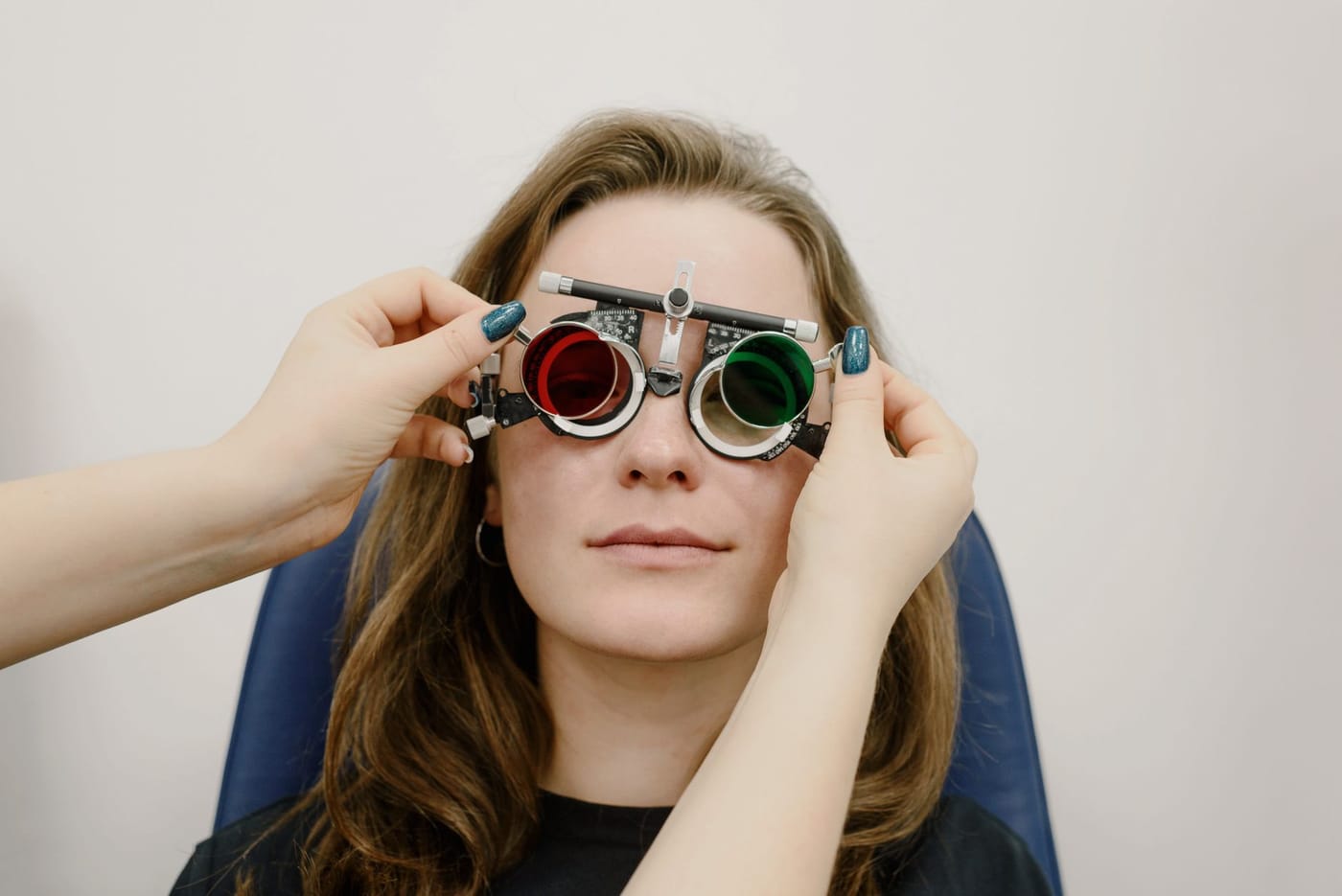
How Often Should I Get an Eye Exam?
For most healthy adults with no symptoms and no risk factors, a complete eye exam every one to two years is reasonable, and yearly is a sensible habit once you reach your 40s or 50s. If you have diabetes, glaucoma, a strong family history of eye disease, high-risk medications, or a prescription that changes, you may need to be seen every year or more often. Anyone with a new or changing symptom should be examined promptly rather than waiting for the next routine visit.
Key Takeaways
- There is no single schedule that fits everyone; age, medical history, and risk factors set the interval.
- Healthy adults with no risk factors: roughly every one to two years; yearly is a good default from the 40s onward.
- People with diabetes usually need a dilated exam every year, sometimes more often if retinopathy is present.
- Children and older adults benefit from more regular checks, since problems can develop quietly.
- Seeing 20/20 does not mean your eyes are healthy; many serious diseases start with no symptoms.
- Do not wait for a routine appointment if a symptom is new, painful, one-sided, or affecting your vision.
Why Patients Ask This Question
Most people ask because their vision seems fine and they are not sure whether an exam is worth their time, or because it has simply been several years and they feel due. Others were told by a family member or primary doctor to "get their eyes checked" and want to know how urgent that really is. The honest answer is that many blinding eye diseases give no early warning, so the value of an exam is greatest exactly when nothing feels wrong.
What This Means for Your Eyes
A complete medical eye exam checks the health of the whole eye, not just how sharply you read a chart. It evaluates the cornea and lens at the front, the pressure inside the eye, the optic nerve, and the retina at the back, along with your pupils and eye alignment.
Because conditions like glaucoma, diabetic retinopathy, and macular degeneration often begin silently, regular exams are how they get caught while they are still treatable. The right interval simply matches how quickly a problem could develop for you, based on your age and health.
Detailed Explanation
Exam frequency is really a risk calculation. A healthy adult in their 20s or 30s with clear vision and no family history changes slowly, so every one to two years is usually enough. As the decades pass, the risk of cataract, glaucoma, and macular degeneration rises, which is why yearly exams become the sensible standard in midlife and beyond.
Certain conditions raise the stakes. Diabetes can damage the retina's blood vessels over time, so people with diabetes are generally advised to have a dilated exam every year, and more frequently if retinopathy is already present or during pregnancy. A family history of glaucoma or macular degeneration, high myopia, previous eye injury or surgery, and certain medications (such as long-term hydroxychloroquine or steroids) also shorten the recommended interval.
Children need their own schedule, with checks in infancy, before school, and periodically thereafter to catch amblyopia ("lazy eye") and refractive problems while they are still correctable. Ultimately your eye doctor will personalize the timing based on what the exam finds.
When This May Be Serious
Routine timing does not apply when something changes. Seek prompt care, rather than waiting for a scheduled visit, for sudden loss of vision; a new curtain, shadow, or dark area in your sight; new flashes of light or a sudden shower of floaters; severe eye pain; or new double vision. Redness with light sensitivity, an eye injury, or a chemical splash also need urgent attention. New weakness, facial droop, trouble speaking, or a severe headache with visual change can signal a stroke and warrant emergency care.
How an Ophthalmologist Evaluates This
The visit starts with your history: what you have noticed, any changes in vision, your general health, medications, and family eye disease. From there a complete exam measures your visual acuity and refraction, tests your pupils and eye movements, checks eye pressure, and uses a slit lamp to examine the front of the eye. Dilating drops open the pupil so the lens, optic nerve, and retina can be seen clearly, and imaging such as OCT or retinal photography may be added to document fine detail. The findings, not a fixed calendar, determine how soon you should return.
Treatment Options
There is nothing to "treat" about the schedule itself; the point is to set the right interval and act on what is found. For a healthy adult, that may simply mean a plan to return in a year or two, with updated glasses if needed. If the exam uncovers a condition, management is matched to it, such as pressure-lowering drops for glaucoma, monitoring or injections for macular degeneration, or coordination with your primary doctor for diabetes. Your ophthalmologist tailors the follow-up interval to your specific risk.
What You Should Not Do
- Do not skip exams just because your vision feels fine; the most serious diseases are often painless and silent.
- Do not assume a store vision screening or a driver's-license check replaces a complete medical eye exam.
- Do not stretch the interval if you have diabetes, glaucoma, or a strong family history of eye disease.
- Do not wait for your "next appointment" if a new symptom appears; get it evaluated promptly.
- Do not rely on 20/20 as proof of eye health.
When to Call May Eye Care Center
Call to schedule a complete eye exam if it has been a year or more, if your vision or prescription seems to be changing, or if you have diabetes, glaucoma, or a family history that puts you at higher risk. Adults across the Hanover area can treat a yearly visit as ongoing protection for their sight. If a symptom is sudden, painful, or affecting your vision, do not wait for a routine slot; seek prompt or emergency care.
Bottom Line
Most adults do well with a complete eye exam every one to two years, moving to yearly with age or added risk, but any new or worrying symptom deserves prompt attention rather than a wait. May Eye Care Center can help you set the right interval for your eyes.
Frequently asked questions
01How often should adults have a dilated eye exam?
It depends on your age and risk factors, and national guidance is risk-based: a baseline comprehensive exam around age 40, dilated exams every one to two years for adults 60 and older — starting at 40 for African Americans, who face higher glaucoma risk — and a yearly dilated exam for people with diabetes or other risk factors. In his own practice, Dr. May encourages adults to treat a yearly eye-health visit as a recurring check-in to protect their sight. If a symptom is new, worsening, painful, one-sided, or affecting your vision, do not wait for a routine visit — have it examined promptly.
02When should I schedule a medical eye exam in Hanover PA?
Call May Eye Care Center in Hanover, PA if an eye symptom is new, recurrent, worsening, interfering with reading or driving, or simply making you concerned. Adults from Hanover, York, Adams County, South Central Pennsylvania, and Maryland can also schedule a yearly eye-health visit for ongoing vision protection. If a symptom is sudden, painful, or affecting your vision, seek prompt evaluation rather than waiting.
This page also answers
- How often should adults have a dilated eye exam?
- What does an ophthalmologist check during an eye exam?
- Can an eye exam find glaucoma, diabetes, or retina problems?
- Do I need an eye exam if I see 20/20?
- When should I schedule a medical eye exam in Hanover PA?
- When should this be checked urgently?
- What testing helps confirm the diagnosis?
- What treatments are available?
- What should patients avoid doing at home?
Medical sources
- aao.org/eye-health/tips-prevention/eye-exams-101
- nei.nih.gov/eye-health-information/healthy-vision/finding-eye-doctor/get-dilated-eye-exam
- nei.nih.gov/eye-health-information/healthy-vision
This article is for educational purposes only and is not a diagnosis, treatment plan, or substitute for an eye examination by a qualified eye doctor. Eye symptoms can have many causes, and some problems can threaten vision if they are not treated promptly. Do not diagnose or treat yourself based only on online information. If you have eye pain, sudden vision loss, flashes, new floaters, a curtain or shadow in your vision, double vision, chemical exposure, trauma, severe redness, light sensitivity, or any concerning eye symptom, seek urgent medical eye care or emergency care.
Schedule your eye exam at May Eye Care Center in Hanover, PA
Serving York, Gettysburg, Adams County, and northern Maryland (driving distances). Call (717) 637-1919 or explore more about eye exam & vision at our practice.
Call (717) 637-1919