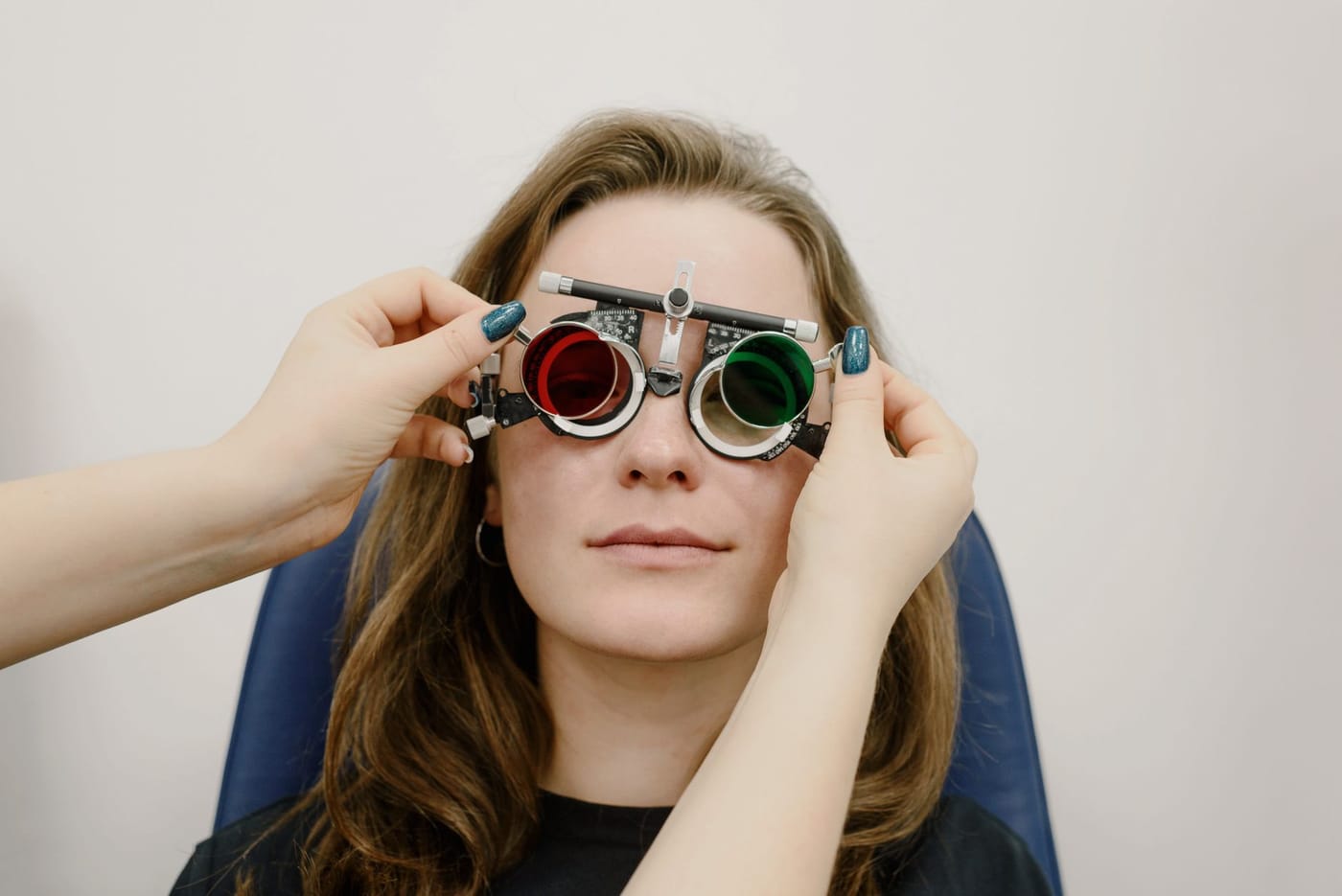
What Does 20/20 Vision Really Mean?
20/20 vision means that at 20 feet you can see what a person with normal eyesight sees at 20 feet; it is a measure of the sharpness of your central vision, not a grade of perfect or superhuman sight. It says nothing about your side vision, color vision, depth perception, night vision, or the health of your eyes. You can read 20/20 and still have glaucoma, early diabetic changes, or other silent eye disease.
Key Takeaways
- 20/20 is a benchmark for normal sharpness of central vision at a standard distance, not "perfect" vision.
- The top number is the testing distance (20 feet); the bottom number is the distance a normal eye reads that line.
- 20/40 means you must be at 20 feet to read what a normal eye reads at 40; smaller bottom numbers (like 20/15) are sharper than average.
- 20/20 does not measure peripheral vision, depth, color, contrast, or eye health.
- Serious diseases like glaucoma and diabetic retinopathy can be present with 20/20 vision.
- Good chart vision is not a substitute for a complete medical eye exam.
Why Patients Ask This Question
Many people treat 20/20 as a gold star, assuming it means their eyes are perfect and healthy. So they are surprised to be told they still need a full exam, or that they have an eye condition despite "passing" the chart. The question usually comes from wanting to know what the number actually measures and whether it really means their eyes are fine.
What This Means for Your Eyes
The eye chart tests one specific thing: how small a letter your central vision can resolve at a set distance. That is useful, but it is a narrow slice of how your eyes work and says nothing about their health.
Vision is much more than sharpness. Your side vision, ability to judge depth, see in low light, perceive contrast, and distinguish colors all matter, and none of them are captured by a 20/20 reading. A person can ace the chart while a disease quietly affects other parts of the visual system.
Detailed Explanation
The 20/20 notation, called Snellen acuity, compares your vision to a normal reference at 20 feet. The first number is always the testing distance; the second is the distance at which a person with normal sight could read that same line of letters. So 20/40 means the smallest letters you can read at 20 feet, a normal eye could read from 40 feet away, and 20/15 means you see at 20 feet what a normal eye needs to be at 15 feet to see, which is sharper than average.
Acuity depends on the eye focusing light precisely on the fovea, the tiny central point of the retina. Glasses or contacts correct refractive errors so that focus lands correctly, which is how someone nearsighted can go from blurry to 20/20 with the right lenses. But focus is only part of the picture.
Many conditions spare central sharpness until late. Glaucoma erodes peripheral vision first; diabetic retinopathy can be present with normal acuity; cataracts may reduce contrast and cause glare before the chart number drops much. That is why 20/20 is reassuring about focus but not about overall eye health.
When This May Be Serious
Trusting 20/20 too much can be a problem. Even with sharp central vision, watch for loss of side vision or bumping into things, glare and halos at night, trouble with contrast, or new distortion where straight lines look bent. Sudden vision loss, new flashes or floaters, a curtain or shadow, or new double vision are always warning signs regardless of how you read the chart. These deserve prompt evaluation because they can reflect disease the chart never detects.
How an Ophthalmologist Evaluates This
Measuring acuity is only the starting point. The ophthalmologist refracts your eyes to find your best-corrected vision, then evaluates the parts of vision the chart misses: visual field testing maps your side vision, eye-pressure and optic-nerve assessment screen for glaucoma, and a dilated retinal exam checks the macula and retina. OCT imaging can reveal subtle macular or optic-nerve changes even when acuity is a crisp 20/20. Together these show whether your eyes are truly healthy, not just well-focused.
Treatment Options
If you are not seeing 20/20, glasses, contact lenses, or refractive surgery can often sharpen focus by correcting nearsightedness, farsightedness, or astigmatism. But if the exam finds a health problem behind the numbers, treatment targets that condition, such as pressure-lowering drops for glaucoma, monitoring or injections for retinal disease, or cataract surgery when a cloudy lens is the cause. The right treatment depends on what the complete exam uncovers, not on the acuity number alone.
What You Should Not Do
- Do not assume 20/20 means your eyes are healthy or disease-free.
- Do not skip a complete eye exam just because you passed a vision screening or a driver's-license check.
- Do not ignore side-vision loss, glare, or distortion simply because your central vision is sharp.
- Do not treat 20/20 as "perfect"; some people see better than 20/20 and it is still just a focus measure.
- Do not dismiss new symptoms because the chart looks fine to you; get them evaluated.
When to Call May Eye Care Center
Call to schedule a complete exam even if you see well, especially if you are overdue, have risk factors, or have noticed changes in side vision, night vision, or contrast that the chart would not capture. Patients in the Hanover area can have both their sharpness and their eye health evaluated together. If you have sudden vision loss, flashes, floaters, or a shadow in your vision, seek prompt care rather than relying on your chart score.
Bottom Line
20/20 measures the sharpness of your central vision at a standard distance, not perfection and not eye health, so pair a good chart reading with a complete medical eye exam at May Eye Care Center to be sure your eyes are truly well.
Frequently asked questions
01Do I need an eye exam if I see 20/20?
Yes — seeing 20/20 does not rule out eye disease. Many serious conditions, including glaucoma, diabetic retinopathy, macular degeneration, and some retinal problems, begin silently before they cause any change you can notice. A medical eye exam checks the health of the eye itself, not just how well you read the chart, so a person can read 20/20 and still need a medical eye evaluation.
This page also answers
- How often should adults have a dilated eye exam?
- What does an ophthalmologist check during an eye exam?
- Can an eye exam find glaucoma, diabetes, or retina problems?
- Do I need an eye exam if I see 20/20?
- When should I schedule a medical eye exam in Hanover PA?
- When should this be checked urgently?
- What testing helps confirm the diagnosis?
- What treatments are available?
- What should patients avoid doing at home?
Medical sources
- aao.org/eye-health/tips-prevention/eye-exams-101
- nei.nih.gov/eye-health-information/healthy-vision/finding-eye-doctor/get-dilated-eye-exam
- nei.nih.gov/eye-health-information/healthy-vision
This article is for educational purposes only and is not a diagnosis, treatment plan, or substitute for an eye examination by a qualified eye doctor. Eye symptoms can have many causes, and some problems can threaten vision if they are not treated promptly. Do not diagnose or treat yourself based only on online information. If you have eye pain, sudden vision loss, flashes, new floaters, a curtain or shadow in your vision, double vision, chemical exposure, trauma, severe redness, light sensitivity, or any concerning eye symptom, seek urgent medical eye care or emergency care.
Schedule your eye exam at May Eye Care Center in Hanover, PA
Serving York, Gettysburg, Adams County, and northern Maryland (driving distances). Call (717) 637-1919 or explore more about eye exam & vision at our practice.
Call (717) 637-1919