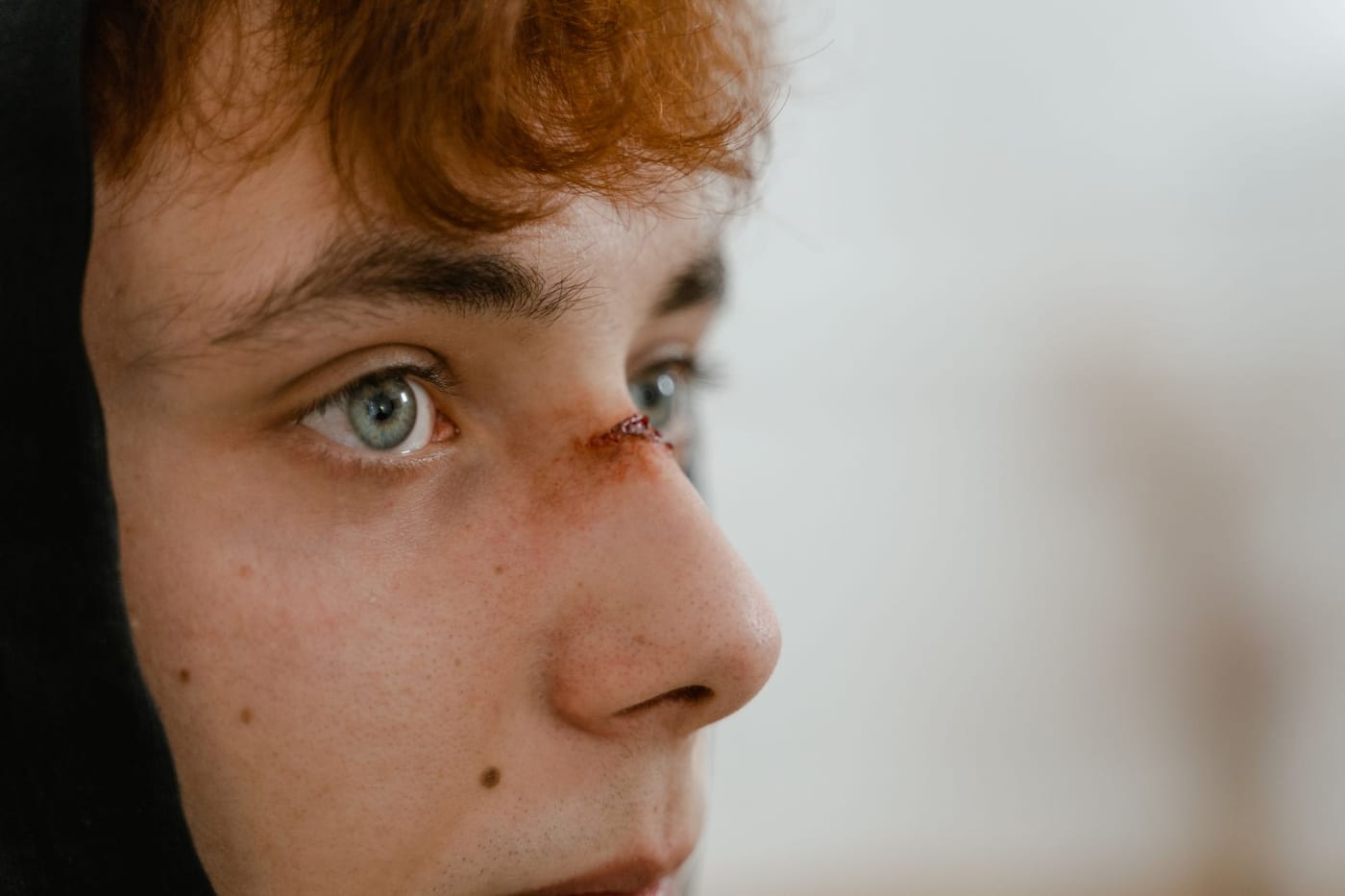
Why Is My Vision Blurry After Getting Hit in the Eye?
Blurry vision after a blow to the eye means the impact affected something inside the eye, and it should be examined the same day. Common causes are a scratched or swollen cornea, blood in the front of the eye (a hyphema), inflammation inside the eye (traumatic iritis), a dislocated or damaged lens, bleeding in the back of the eye, bruising of the retina, or a retinal tear or detachment. A little watering and blur right after a knock can come from a surface scratch, but blur that persists, worsens, or comes with pain, light sensitivity, double vision, or a shadow in your vision is a warning sign, do not wait to see if it clears.
Key Takeaways
- Blur after trauma is a signal that the eyeball itself, not just the skin, was affected.
- Front-of-the-eye causes include a corneal scratch, a hyphema, and traumatic iritis.
- Back-of-the-eye causes include retinal bruising, bleeding, and a retinal tear or detachment.
- A shadow or curtain, a shower of floaters, or flashes points toward a retinal problem, an urgent situation.
- Blood pooling in the colored part of the eye (hyphema) needs urgent care and rest to prevent rebleeding.
- Any blurred vision after a hit deserves a same-day dilated eye exam; it is not something to sleep on.
Why Patients Ask This Question
Right after being struck, by a ball, a fist, an elbow, or a fall, people expect it to hurt, but when the vision also goes blurry or dim they worry the eye is seriously damaged. They want to know why the blur is happening and whether it will clear on its own or means they need to be seen right away.
What This Means for Your Eyes
Clear vision depends on light passing cleanly through the cornea, the lens, and the fluid inside the eye to reach a healthy retina. A blunt impact can cloud or disrupt any of those. If the cornea is scratched or swollen, the front window loses its clarity. If blood or inflammatory cells fill the fluid in the front chamber, light is scattered. If the lens is shaken loose or bruised, focus is lost.
At the back, the retina turns light into signals for the brain. Trauma can bruise it, cause it to bleed, or tear it and lift it off the wall of the eye, each of which blurs or blocks part of the picture. Because blur can come from the front or the back, and because retinal problems are the most time-sensitive, the source has to be found by examination rather than guessed at from how it feels.
Detailed Explanation
In the front of the eye, blunt force can cause a corneal abrasion or corneal swelling that blurs and stings, a hyphema where blood layers in the anterior chamber and clouds vision while raising the risk of pressure spikes, or traumatic iritis where inflammation brings a deep ache, light sensitivity, and haze. The lens can be jostled out of position or develop a traumatic cataract, both of which distort focus.
In the back of the eye, the same blow can bruise the retina, which often blurs central vision temporarily, or cause bleeding into the vitreous gel, which fills the view with floaters and haze. Most serious is a retinal tear or detachment, which classically produces flashes of light, a sudden increase in floaters, and a dark curtain moving across the vision. A detachment is an emergency because early repair preserves sight while delay can make the loss permanent. Blur alone cannot tell these apart, so a full exam is needed.
When This May Be Serious
Treat blurred vision after a blow as urgent, and seek same-day care or an ER, especially with any of these:
- A shadow, curtain, or missing area in your vision, or vision that keeps worsening.
- New flashes of light or a sudden shower of floaters.
- Blood visible inside the colored part of the eye.
- Severe eye pain, marked light sensitivity, or double vision.
- Vision that is significantly reduced right after the injury rather than just slightly hazy.
How an Ophthalmologist Evaluates This
Vision is measured first, then the pupils are checked for a relative afferent defect that can indicate optic nerve or major retinal injury. The slit-lamp exam looks for a corneal abrasion, a hyphema, the inflammatory cells of iritis, and any shift of the lens. Eye pressure is measured, since trauma can raise it, particularly with a hyphema. The pupil is dilated for a thorough examination of the vitreous and retina, checking for bleeding, bruising, and tears or detachment out to the far periphery. If blood blocks the view, ultrasound of the eye or OCT imaging is used, and CT is added if a fracture or foreign body is possible.
Treatment Options
Treatment follows the cause the exam reveals. A corneal abrasion is treated with antibiotic drops and heals in days. A hyphema is managed with rest, a shield, activity restriction, and monitoring of eye pressure. Traumatic iritis responds to anti-inflammatory and dilating drops. A dislocated lens or traumatic cataract may later need surgery. A retinal tear is sealed with laser in the office; a retinal detachment or significant vitreous bleeding is handled surgically by a retina specialist. Because several of these are time-sensitive, the value of a prompt exam is that it gets the right treatment started before vision is lost.
What You Should Not Do
- Do not wait overnight to see if the blur clears; retinal problems get harder to fix with time.
- Do not rub or press on the eye, which can worsen a hyphema or a retinal tear.
- Do not do heavy lifting, bending, or straining, especially with blood in the eye, until you are cleared.
- Do not take aspirin or other blood thinners for the pain without a doctor's okay after trauma.
- Do not assume a scratch just because the front hurts; the blur may be coming from the retina in back.
When to Call May Eye Care Center
Blurred vision after being hit in the eye warrants a same-day evaluation. Call May Eye Care Center to be seen promptly, and go straight to an emergency room if you have a curtain or shadow in your vision, a sudden burst of flashes and floaters, blood in the eye, or severe pain, which point to a retinal detachment or other serious injury. Patients in the Hanover area can reach the office to arrange an urgent dilated exam.
Bottom Line
Blur after a blow means the injury reached inside the eye, from a corneal scratch or hyphema up front to a retinal tear or detachment in back, so get a same-day dilated exam rather than waiting to see if it clears.
Frequently asked questions
01What should I do before seeing an eye doctor after eye trauma?
The first priorities are protecting the eye, avoiding any rubbing or pressure, and irrigating immediately if a chemical exposure is involved. Do not patch the eye, press on it, or attempt to remove an object yourself. From there, the safest step is prompt medical eye care.
This page also answers
- When should I go to the ER for an eye injury?
- What should I do before seeing an eye doctor after eye trauma?
- Can an eye injury cause permanent vision loss?
- How quickly should chemical eye exposure be treated?
- What warning signs after eye injury are dangerous?
- When should this be checked urgently?
- What testing helps confirm the diagnosis?
- What treatments are available?
- What should patients avoid doing at home?
Medical sources
- aao.org/eye-health/diseases/black-eye
- aao.org/eye-health/diseases/what-is-hyphema
- aao.org/eye-health/tips-prevention/injuries
This article is for educational purposes only and is not a diagnosis, treatment plan, or substitute for an eye examination by a qualified eye doctor. Eye symptoms can have many causes, and some problems can threaten vision if they are not treated promptly. Do not diagnose or treat yourself based only on online information. If you have eye pain, sudden vision loss, flashes, new floaters, a curtain or shadow in your vision, double vision, chemical exposure, trauma, severe redness, light sensitivity, or any concerning eye symptom, seek urgent medical eye care or emergency care.
Schedule your eye exam at May Eye Care Center in Hanover, PA
Serving York, Gettysburg, Adams County, and northern Maryland (driving distances). Call (717) 637-1919 or explore more about eye emergency at our practice.
Call (717) 637-1919