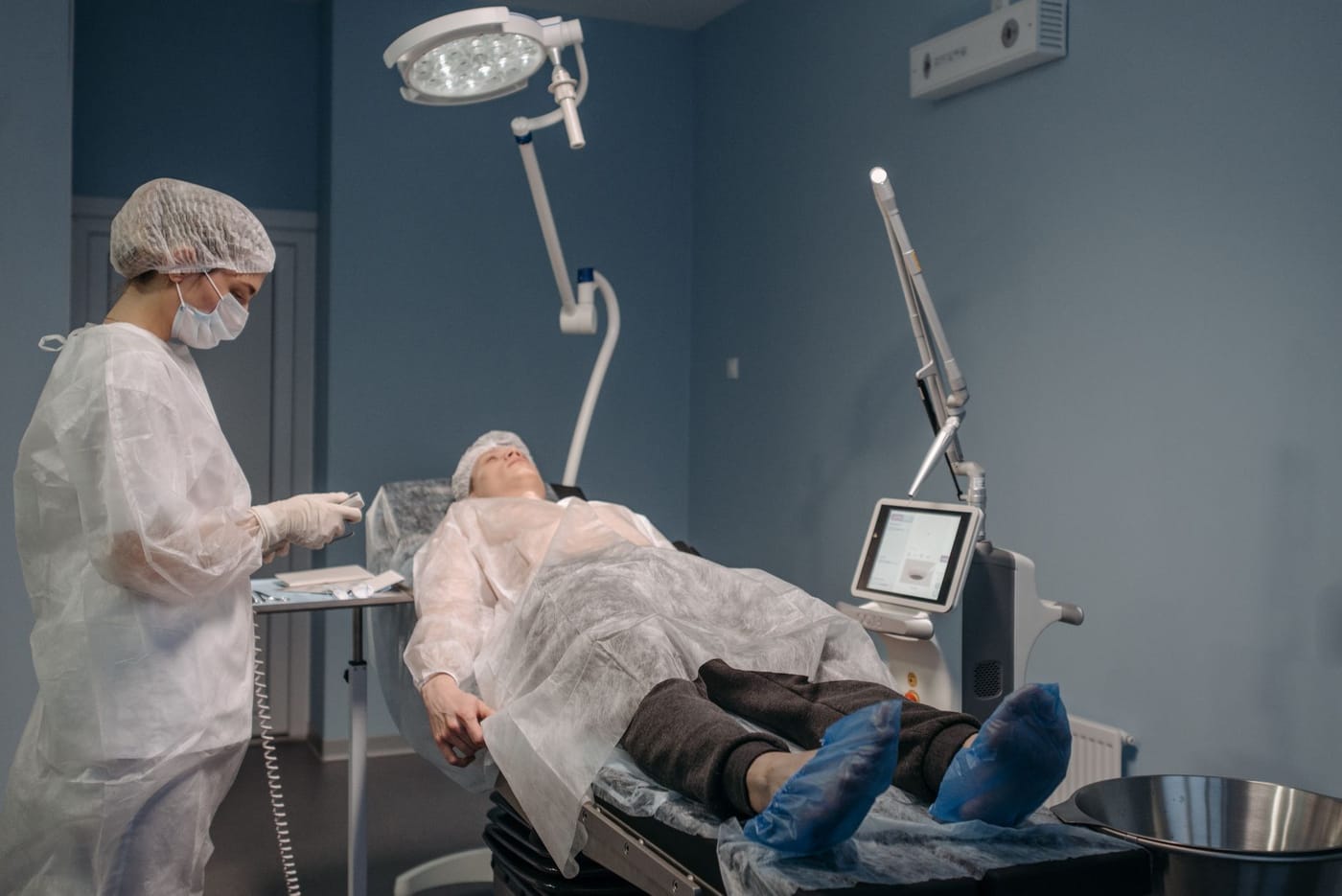
What is the difference between nearsighted, farsighted, and astigmatism?
These are all refractive errors, meaning the eye doesn't focus light precisely on the retina. Nearsightedness (myopia) blurs distant objects, usually because the eye is too long or the cornea too curved. Farsightedness (hyperopia) can strain near vision and sometimes distance. Astigmatism distorts focus at all distances because the cornea is shaped more like a football than a basketball. Glasses and contacts correct these externally, while LASIK, PRK, or lens-based surgery may reduce dependence for the right candidates, depending on your eye's shape and health.
§Read video transcript
The shape of your eyes plays an important role in the clarity and sharpness of your vision. Your eye’s ability to focus light precisely on the retina depends on the shape of your cornea, the flexibility of your lens, and the length of your eye. A refractive error occurs when these conditions are not perfectly aligned, resulting in blurry vision at one or more distances. One of the most common refractive errors is myopia, or nearsightedness. Myopia occurs when the eye is too long, the cornea is too curved, or a combination of the two. This results in light coming into focus before reaching the back of the eye, causing blurry distance vision. Other refractive errors include hyperopia, or farsightedness, where the eye is too short, or cornea curved too little; presbyopia, which is the loss of lens flexibility with age; and astigmatism, where the cornea is shaped irregularly. Refractive Surgery, Prescription glasses and contacts correct your refractive error by adjusting the point of focus back onto the retina, resulting in clearer vision. The type of refractive error and the degree of severity determine which lens type and strength are used to compensate for the error. To get the best possible vision, your eye doctor can find the cause of your blurry vision, and offer the best corrective option for you. Over time, your eye’s shape may change, so it is important to see your doctor annually to maintain the clearest possible vision. Schedule your next eye exam today, to see a clearer tomorrow.
Medical sources
- nei.nih.gov/eye-health-information/eye-conditions-and-diseases/astigmatism
- aao.org/eye-health/treatments/lasik
This page and video are for general patient education and are not a substitute for a medical examination, diagnosis, or treatment. Eye conditions vary by individual. For advice about your eyes, schedule an evaluation with May Eye Care Center. In an emergency, call 911.
Schedule your eye exam at May Eye Care Center in Hanover, PA
Serving York, Gettysburg, Adams County, and northern Maryland (driving distances). Call (717) 637-1919 or explore more about LASIK at our practice.
Call (717) 637-1919