What is Fuchs Dystrophy?
Fuchs’ dystrophy is an inherited condition of the cornea’s inner pumping layer, the endothelium. Those pump cells keep the cornea thin and clear, and they do not regenerate — so as they decline, fluid builds up and the cornea swells. The classic early symptom is blurry, foggy morning vision that clears as the day goes on. It usually appears after age 50 and progresses slowly. Mild cases are managed with salt-based drops; advanced cases respond very well to modern partial-thickness corneal transplants such as DMEK. Regular monitoring guides the timing.
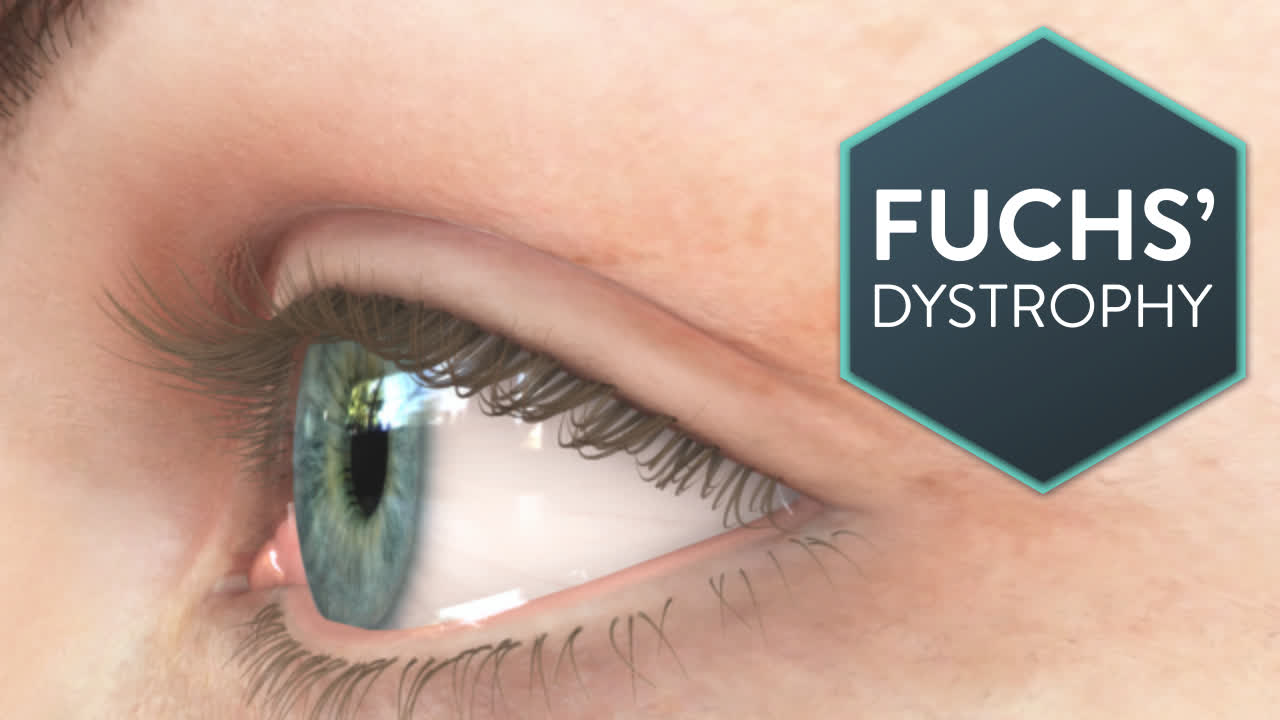
§Read video transcript
Fuchs' Dystrophy, is an inherited condition, that affects the endothelium, the delicate innermost layer of the cornea. Fuchs' Dystrophy occurs when the endothelial cells gradually deteriorate over time. Once lost, these endothelial cells do not grow back, leading to corneal clouding, swelling, and impaired vision. In the early stages of Fuchs' Dystrophy, patients notice an increase in the appearance of glare, and increased sensitivity to light. As the condition progresses, vision may be blurred in the morning, then sharpen as the day goes on. As the condition worsens, vision may appear blurry throughout the day. Fuchs' dystrophy affects both eyes, and is slightly more common among women than men. It usually starts to develop around 30 to 40 years of age, with no apparent cause. If vision becomes severely impaired, a corneal transplant may be required.
Medical sources
- aao.org/eye-health/diseases/what-is-fuchs-dystrophy
- aao.org/eye-health/tips-prevention/ophthalmology-subspecialists
This page and video are for general patient education and are not a substitute for a medical examination, diagnosis, or treatment. Eye conditions vary by individual. For advice about your eyes, schedule an evaluation with May Eye Care Center. In an emergency, call 911.
Schedule your eye exam at May Eye Care Center in Hanover, PA
Serving York, Gettysburg, Adams County, and northern Maryland (driving distances). Call (717) 637-1919 or explore more about cornea at our practice.
Call (717) 637-1919