Can Wearing Glasses Make My Eyes Weaker?
No — wearing glasses does not weaken your eyes or make your natural vision worse. Glasses only bend light so it focuses correctly while you have them on; they do not change the underlying eye. Vision often seems worse after you start wearing glasses simply because you get used to seeing clearly and notice the blur more when you take them off, while your prescription continues to change on its own with age or growth.
Key Takeaways
- Glasses correct the focus of light; they do not physically alter or weaken the eye.
- Vision that seems worse without glasses is your brain adjusting to clarity and noticing blur more, not damage from the glasses.
- Prescriptions change over time from normal aging (presbyopia), eye growth in children, or conditions like early cataract — not from wearing glasses.
- Wearing the correct prescription is helpful, not harmful, and reduces eyestrain and headaches.
- Red flag: a rapidly worsening prescription, or blur that glasses no longer fix, is worth a medical exam to rule out a health cause.
Why Patients Ask This Question
This is one of the most common worries in eye care. People notice that after they start wearing glasses, the world looks terrible without them, and they conclude the glasses made their eyes lazy or dependent. Parents worry that putting glasses on a child will trap them in glasses for life. It feels intuitive, but it reverses cause and effect — and understanding the real reason is genuinely reassuring.
What This Means for Your Eyes
Glasses are external lenses. They redirect incoming light so it focuses sharply on the retina, but they do not touch or reshape the cornea, lens, or the length of the eye. When you remove them, your eye is exactly as it was before — the blur you see is your true uncorrected vision, which you now notice more because you have grown used to seeing clearly.
Meanwhile, the eye keeps changing for reasons that have nothing to do with glasses: children's eyes grow and often become more nearsighted, and adult lenses stiffen with presbyopia. Those natural changes get blamed on the glasses, but they would happen either way.
Detailed Explanation
The myth comes from a real observation — vision often seems to "get worse" over the years someone wears glasses — paired with a wrong explanation. The prescription increases because of natural, independent processes. In children and teens, the eye lengthens as they grow, steadily increasing nearsightedness until growth stops; this happens whether or not glasses are worn. In adults over 40, the lens stiffens (presbyopia), so reading correction strengthens over time.
Properly prescribed glasses do not accelerate this progression. In children, some research looks at how certain specialized lens designs might slow myopia, but that is about myopia-control lenses, not ordinary glasses causing harm. There is also a comfort factor: once your brain adapts to sharp, effortless vision, the blur without glasses feels more pronounced — but the eye is unchanged. Glasses are a corrective tool, like a cast that supports rather than a crutch that weakens.
When This May Be Serious
The glasses are not the problem, but a changing prescription sometimes is. See an eye doctor if your prescription is climbing quickly, if new glasses do not restore clear vision, or if blur comes with glare, distortion, or a change in one eye — these can indicate an early cataract, blood-sugar changes, or another condition. In children, an eye that turns in or out, or one eye that sees much worse than the other, needs prompt evaluation because a lazy eye is time-sensitive to treat.
How an Ophthalmologist Evaluates This
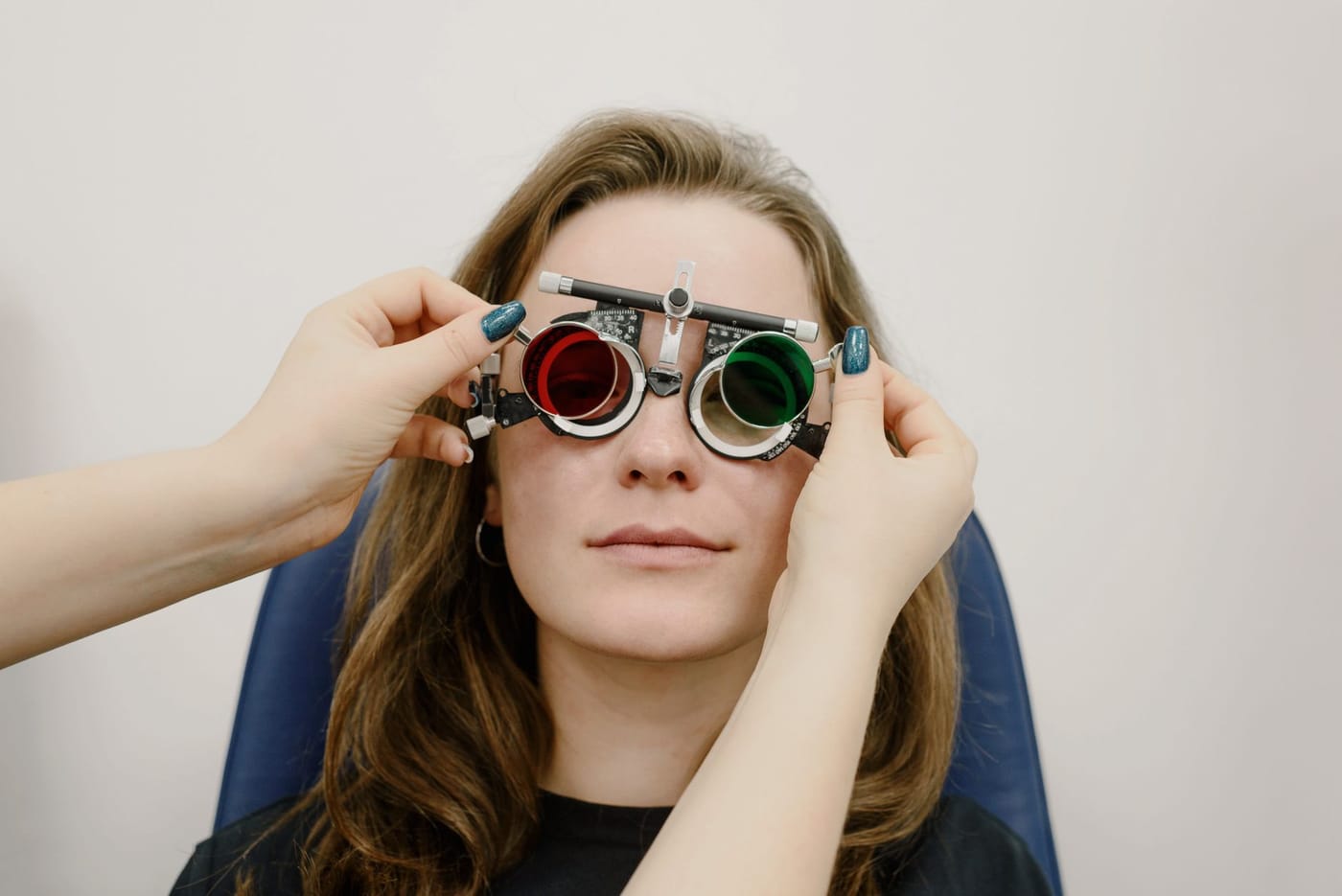
The visit centers on a careful refraction to define the current prescription and compare it with past ones, so the doctor can distinguish normal, expected change from anything unusual. The lens is examined for early cataract, the tear film for dry eye, and the retina and optic nerve during a dilated exam. In children, the doctor also checks eye alignment and screens for a lazy eye. The goal is to confirm the change is ordinary — or to catch a treatable cause if one exists.
Treatment Options
There is nothing to "treat" about glasses causing weakness, because they do not. The right approach is simply to wear an up-to-date, correct prescription and to have periodic exams so the correction stays current. For adults who dislike glasses, contact lenses and laser vision correction are alternatives that correct the same underlying focusing error. In children whose myopia is progressing, specific myopia-control options — low-dose atropine, myopia-control lenses, or orthokeratology — can slow that progression, but standard glasses remain safe and helpful.
What You Should Not Do
- Do not avoid or ration your glasses hoping to "strengthen" your eyes; that only leaves you squinting and strained.
- Do not keep a child out of needed glasses out of fear of dependence; correction supports healthy vision development.
- Do not blame the glasses for a rising prescription — have the underlying change checked instead.
- Do not skip regular exams; a changing prescription occasionally signals a treatable condition worth catching.
When to Call May Eye Care Center
Reach out for a routine exam if your prescription seems to be changing or you are unsure it is current, and especially if new glasses are not giving you clear vision. Families in the Hanover area can also use these visits to check a child's eye alignment and vision development. Seek prompt care instead for any sudden vision loss, new flashes or floaters, or eye pain.
Bottom Line
Glasses do not weaken your eyes; they correct focus while your prescription changes on its own with age or growth, and wearing the right correction is helpful, not harmful.
This page also answers
- Why is my vision blurry even with glasses?
- Can an eye disease make my prescription change?
- What is the difference between astigmatism and presbyopia?
- Do I need glasses, surgery, or a medical eye exam?
- When should adults update their glasses prescription?
- When should this be checked urgently?
- What testing helps confirm the diagnosis?
- What treatments are available?
- What should patients avoid doing at home?
Medical sources
- nei.nih.gov/eye-health-information/eye-conditions-and-diseases/refractive-errors
- nei.nih.gov/eye-health-information/eye-conditions-and-diseases/astigmatism
- aao.org/eye-health/tips-prevention/eye-exams-101
This article is for educational purposes only and is not a diagnosis, treatment plan, or substitute for an eye examination by a qualified eye doctor. Eye symptoms can have many causes, and some problems can threaten vision if they are not treated promptly. Do not diagnose or treat yourself based only on online information. If you have eye pain, sudden vision loss, flashes, new floaters, a curtain or shadow in your vision, double vision, chemical exposure, trauma, severe redness, light sensitivity, or any concerning eye symptom, seek urgent medical eye care or emergency care.
Schedule your eye exam at May Eye Care Center in Hanover, PA
Serving York, Gettysburg, Adams County, and northern Maryland (driving distances). Call (717) 637-1919 or explore more about eye exam & vision at our practice.
Call (717) 637-1919