Why Are My New Glasses Blurry?
New glasses often look blurry at first for reasons that are usually harmless: your eyes and brain need a few days to adapt to a changed prescription, especially with a big jump, new astigmatism correction, or first-time progressives. But blur can also mean the prescription or the lens fabrication is off, or that the frame is not fitted correctly. If clear vision has not settled within one to two weeks, the glasses should be rechecked.
Key Takeaways
- A short adjustment period of a few days to about two weeks is normal, particularly after a large change or new astigmatism correction.
- Progressive (no-line) lenses take the longest to adapt to and require pointing your nose at what you want to see.
- Blur can also come from a genuine error: wrong prescription, mismade lenses, or a lens not centered over your pupils.
- A poor frame fit — lenses too high, too low, or tilted — can blur vision even when the prescription is right.
- Red flag: persistent blur, double vision, distortion, dizziness, or headaches beyond two weeks means both the glasses and your eyes should be rechecked.
Why Patients Ask This Question
It is deflating to pick up long-awaited new glasses and find the world looks worse than before. Patients wonder if they got the wrong prescription, if the optician made a mistake, or if their eyes are changing again. Some feel dizzy or off-balance, especially with progressives, and worry something is wrong. Most of this resolves, but knowing which blur is normal adaptation and which is a real error is what people want to sort out.
What This Means for Your Eyes
When your prescription changes, the image reaching your retina changes shape and size, and your brain has run on the old pattern for years. For a short time it must recalibrate, which can make straight lines seem to bow or vision feel swimmy even though the lenses are correct. This settles as the brain adapts.
But glasses are also a manufactured product fitted to your face. If the prescription was measured slightly off, the lenses ground incorrectly, or the optical center of each lens does not sit in front of your pupil, the light will not focus where it should. In those cases the blur is real and will not adapt away.
Detailed Explanation
Normal adaptation is the most common reason. A larger change in power, a new or changed astigmatism correction, or a switch to progressive lenses alter the image enough that the brain needs several days to a couple of weeks to adjust. Progressives are the classic culprit: they blend distance, intermediate, and near zones into one lens with soft blur toward the lower outer edges, so wearers must learn to look through the right part of the lens and turn their head rather than their eyes.
The other category is genuine error. The prescription may be slightly inaccurate; lenses can be made with the wrong power or axis; the fitting height or pupillary distance may be off, so the optical center misses your pupil; or the frame may sit tilted. High prescriptions and strong astigmatism are more sensitive to small fitting errors. Occasionally the eyes have changed since the exam, or dry eye is blurring vision independent of the glasses.
When This May Be Serious
Blur from new glasses is almost never dangerous, but it should not be ignored indefinitely. Have the glasses and your eyes rechecked if blur, double vision, distortion, dizziness, headaches, or eyestrain persist beyond about two weeks, or if one lens is clearly worse than the other. Separately, if you notice sudden vision loss, new flashes or floaters, or a shadow in your vision — symptoms unrelated to the glasses — seek prompt eye care, since those point to eye problems rather than a lens issue.
How an Ophthalmologist Evaluates This
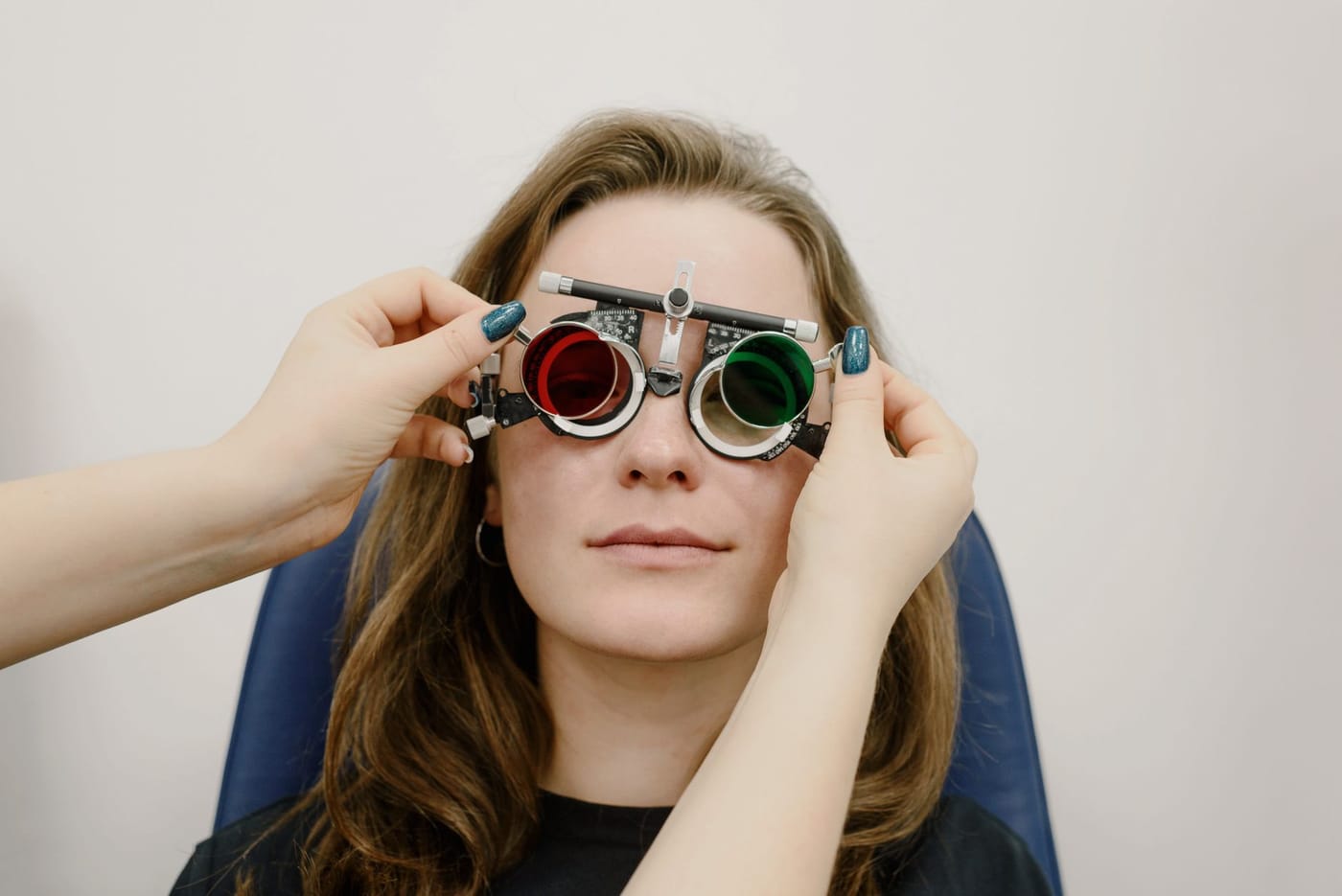
The doctor repeats the refraction to confirm the prescription, then compares it to what was actually made — using a lensmeter to read the glasses' power and axis and checking that the optical centers line up with your pupils. Frame fit, tilt, and lens height are assessed, which matters especially for progressives and strong prescriptions. The tear film is examined for dry eye, and a general eye-health check rules out any change in the eye itself. This determines whether the fix is time, a remake, or a refit.
Treatment Options
If it is normal adaptation, the answer is consistent wear and a little patience — most people adjust within days to two weeks. If the prescription is off, it is re-measured and the lenses remade. If the lenses were fabricated incorrectly or not centered over your pupils, they are corrected or replaced, usually at no cost within the optical's warranty period. A poorly sitting frame is refitted, and if dry eye is contributing, treating the tear film clears the fluctuating blur.
What You Should Not Do
- Do not switch back and forth between old and new glasses all day; that stalls the adaptation your brain needs.
- Do not tough out blur, double vision, or dizziness for more than about two weeks assuming it must be normal.
- Do not tilt your head to peer over progressives instead of pointing your nose at what you want to see.
- Do not assume the prescription is wrong before the glasses have been read and the fit checked, and do not ignore dry eye, which blurs vision through any lens.
When to Call May Eye Care Center
Get in touch if new glasses are still blurry, distorted, or uncomfortable after a couple of weeks, or if they cause persistent headaches or dizziness. For patients in the Hanover area, a recheck can confirm whether the prescription is accurate and the lenses were made and fitted correctly. If you instead have sudden vision loss, flashes, floaters, or eye pain, seek urgent care, as those are not a glasses problem.
Bottom Line
New glasses commonly blur for a week or two while your brain adapts — especially progressives and new astigmatism correction — but blur that lasts longer can mean a wrong prescription or a fitting error, so have them rechecked if clarity does not settle.
This page also answers
- Why is my vision blurry even with glasses?
- Can an eye disease make my prescription change?
- What is the difference between astigmatism and presbyopia?
- Do I need glasses, surgery, or a medical eye exam?
- When should adults update their glasses prescription?
- When should this be checked urgently?
- What testing helps confirm the diagnosis?
- What treatments are available?
- What should patients avoid doing at home?
Medical sources
- nei.nih.gov/eye-health-information/eye-conditions-and-diseases/refractive-errors
- nei.nih.gov/eye-health-information/eye-conditions-and-diseases/astigmatism
- aao.org/eye-health/tips-prevention/eye-exams-101
This article is for educational purposes only and is not a diagnosis, treatment plan, or substitute for an eye examination by a qualified eye doctor. Eye symptoms can have many causes, and some problems can threaten vision if they are not treated promptly. Do not diagnose or treat yourself based only on online information. If you have eye pain, sudden vision loss, flashes, new floaters, a curtain or shadow in your vision, double vision, chemical exposure, trauma, severe redness, light sensitivity, or any concerning eye symptom, seek urgent medical eye care or emergency care.
Schedule your eye exam at May Eye Care Center in Hanover, PA
Serving York, Gettysburg, Adams County, and northern Maryland (driving distances). Call (717) 637-1919 or explore more about eye exam & vision at our practice.
Call (717) 637-1919