Why Do I See Better When I Squint?
You see better when you squint because narrowing your eyelids creates a "pinhole" effect. By blocking the scattered, out-of-focus light rays around the edges and letting only the central, straighter rays through, squinting sharpens the image on your retina — the same principle as a pinhole camera. It is a useful clue that you likely have an uncorrected refractive error, such as nearsightedness or astigmatism, that glasses could fix.
Key Takeaways
- Squinting narrows the opening light passes through, blocking blurred peripheral rays so only sharper central rays reach the retina.
- This pinhole effect temporarily improves focus, which is why squinting makes distant signs or small print clearer.
- Needing to squint to see is a strong sign of an uncorrected refractive error like myopia or astigmatism.
- Squinting is a workaround, not a fix, and it can cause eyestrain, fatigue, and headaches over time.
- Red flag: new or worsening squinting, or blur that squinting no longer helps, deserves an eye exam rather than continued straining.
Why Patients Ask This Question
People notice they instinctively scrunch their eyes to read a road sign, the TV, or a menu, and they wonder why that helps and whether it is bad for their eyes. Parents often spot a child squinting at the board or the television. It is a natural curiosity, and it is also a genuinely useful observation, because the very fact that squinting helps points toward a correctable focusing problem.
What This Means for Your Eyes
In an uncorrected refractive error, light rays entering across the whole pupil do not all focus to a single point on the retina, so the image blurs. When you squint, your narrowed eyelids act like an aperture, physically blocking the outer rays that are most out of focus. Only the central, better-focused rays pass through, so the image on the retina is sharper.
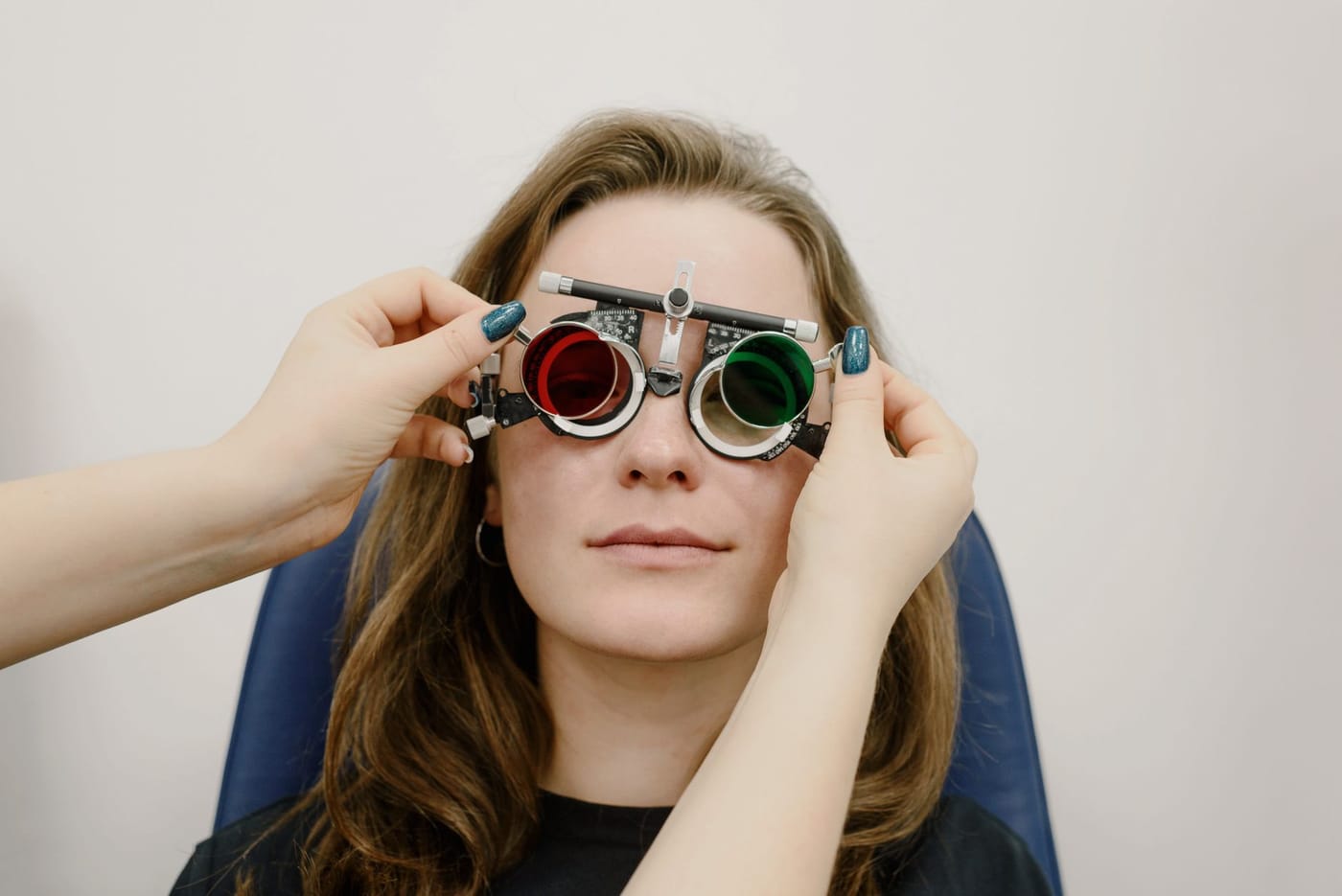
This is the same principle behind the pinhole occluder eye doctors use in the exam room. It tells you the blur comes from a focusing error the eye's optics can correct, rather than from the retina. The catch is that squinting also reduces the light entering the eye and requires constant muscle effort, so it is not a comfortable long-term solution.
Detailed Explanation
Optically, a blurred image forms when rays from a point of light spread over an area of the retina instead of converging on one spot; the width of that blurred spot is what makes vision fuzzy. The size of the blur grows with the size of the pupil, so squinting shrinks the effective aperture, shrinks the blur circle, and increases depth of focus, sharpening the image. This is exactly why doctors use a pinhole occluder: if blurry vision improves markedly through a pinhole, the cause is almost certainly refractive and correctable with lenses, whereas blur that does not improve suggests a problem in the eye's media or retina.
The effect works for nearsightedness, farsightedness, and astigmatism alike, which is why so many people with any uncorrected error find themselves squinting. It is a harmless reflex in the moment, but relying on it keeps the focusing and eyelid muscles working overtime, producing eyestrain, tired eyes, and tension headaches — and it does nothing to fix the underlying error, which proper correction handles effortlessly.
When This May Be Serious
Squinting to see is generally just a sign of an easily corrected refractive error, not an emergency. Be evaluated if squinting is new or increasing, if it no longer helps as it once did, or if blur comes with glare, halos, distortion, double vision, or eye pain — these can point to an early cataract or other eye condition rather than a simple prescription need. In children, persistent squinting, head tilting, or one eye that seems weaker warrants an exam to rule out a lazy eye or misalignment. Sudden vision loss should always prompt urgent care.
How an Ophthalmologist Evaluates This
The doctor may use a pinhole occluder to demonstrate the effect: if vision improves through the pinhole, the blur is refractive and correctable. A refraction then measures the exact nearsightedness, farsightedness, or astigmatism responsible. A full eye-health exam — including the lens, cornea, and a dilated retinal look when appropriate — confirms there is no other cause of blur, such as an early cataract. In children, eye alignment and screening for a lazy eye are part of the evaluation.
Treatment Options
The real fix is correcting the underlying refractive error. Glasses are the simplest solution and eliminate the need to squint immediately, and contact lenses are an alternative for many people. For adults with a stable prescription who want to reduce dependence on glasses, laser vision correction such as LASIK or PRK, or lens-based procedures for higher prescriptions, can correct the error at its source. If squinting is caused by an early cataract rather than a simple refractive error, that is treated on its own path. In every case, correcting the focus removes both the blur and the strain.
What You Should Not Do
- Do not rely on squinting as a substitute for an eye exam and proper correction; it strains your eyes and fixes nothing.
- Do not ignore a child who squints to see the board or television, since it often signals uncorrected vision or a lazy eye.
- Do not assume squinting that stops helping is nothing — blur that a pinhole no longer sharpens can point to a cataract or retinal issue.
- Do not treat sudden vision loss as something to squint through; that needs prompt care.
When to Call May Eye Care Center
Book an exam if you or your child are squinting to see clearly, or if blur has crept into reading, driving, or seeing across a room. For patients in the Hanover area, an exam identifies the exact refractive error and gets you the right correction so squinting is no longer necessary. Seek urgent care instead for sudden vision loss, new flashes or floaters, or eye pain, which are not simple focusing problems.
Bottom Line
Squinting sharpens vision through a pinhole effect that blocks blurred light rays, and needing to do it is a clear sign of an uncorrected refractive error; glasses, contacts, or laser correction fix the focus so you no longer have to strain.
This page also answers
- Why is my vision blurry even with glasses?
- Can an eye disease make my prescription change?
- What is the difference between astigmatism and presbyopia?
- Do I need glasses, surgery, or a medical eye exam?
- When should adults update their glasses prescription?
- When should this be checked urgently?
- What testing helps confirm the diagnosis?
- What treatments are available?
- What should patients avoid doing at home?
Medical sources
- nei.nih.gov/eye-health-information/eye-conditions-and-diseases/refractive-errors
- nei.nih.gov/eye-health-information/eye-conditions-and-diseases/astigmatism
- aao.org/eye-health/tips-prevention/eye-exams-101
This article is for educational purposes only and is not a diagnosis, treatment plan, or substitute for an eye examination by a qualified eye doctor. Eye symptoms can have many causes, and some problems can threaten vision if they are not treated promptly. Do not diagnose or treat yourself based only on online information. If you have eye pain, sudden vision loss, flashes, new floaters, a curtain or shadow in your vision, double vision, chemical exposure, trauma, severe redness, light sensitivity, or any concerning eye symptom, seek urgent medical eye care or emergency care.
Schedule your eye exam at May Eye Care Center in Hanover, PA
Serving York, Gettysburg, Adams County, and northern Maryland (driving distances). Call (717) 637-1919 or explore more about eye exam & vision at our practice.
Call (717) 637-1919