Why Does My Glasses Prescription Keep Changing?
A glasses prescription keeps changing mainly because the eye itself keeps changing. In your 40s and 50s the natural lens stiffens (presbyopia), so reading correction shifts. Later, an early cataract can steadily change the lens's focusing power, and blood-sugar swings from diabetes can temporarily move the prescription. Small year-to-year drift is normal; frequent, large, or sudden changes deserve a medical eye exam.
Key Takeaways
- Prescriptions drift because the lens, cornea, and eye length change over a lifetime, not because your last glasses were wrong.
- After about 40, presbyopia predictably increases your near correction every few years.
- A cataract forming in the lens can shift the prescription, sometimes making distance blurrier while near vision briefly improves.
- Uncontrolled diabetes can swing the prescription within days or weeks as blood sugar rises and falls.
- Red flag: a sudden change, new glare or distortion, or blur in one eye that glasses no longer fix should be examined, not just re-refracted.
Why Patients Ask This Question
Most people expect glasses to be a one-time fix, so it is frustrating to be back at the optical shop every year or two. Patients wonder whether their eyes are "getting worse," whether cheaper glasses caused it, or whether something is wrong. Usually the answer is reassuring, but the worry is reasonable, because a shifting prescription can occasionally be the first clue to a treatable condition.
What This Means for Your Eyes
Glasses simply bend light so it lands sharply on the retina, and the prescription is a snapshot of how your eye focuses on the day it was measured. As the lens loses flexibility with age, or its clarity and shape change with an early cataract, the amount of correction needed changes with it. The cornea's curvature and the length of the eye can also contribute.
So a changing number does not mean your eyes are failing — it means the optical system is a living, aging structure. The key is telling ordinary aging drift apart from a change driven by disease, which is what an exam sorts out.
Detailed Explanation
There are a few common reasons a prescription moves. Presbyopia is the big one after 40: the lens gradually stiffens and can no longer change shape to focus up close, so your reading add grows into the 60s. Cataract is the second driver in older adults; as the lens clouds and changes density, it classically causes a "myopic shift" that can make distance blurrier while briefly improving near vision without glasses.
Diabetes is a third cause: high blood sugar draws fluid into the lens and changes its shape, producing swings that come and go with glucose control. Less often, dry eye, corneal disease such as keratoconus, or certain medications can nudge the numbers. In children and young adults, ongoing growth of the eye simply increases nearsightedness until the eye stops lengthening.
When This May Be Serious
A slowly changing prescription is usually benign. Have it checked more urgently if you notice a sudden or rapid change; blur that new glasses do not fully correct; new glare, halos, or ghosting; distortion where straight lines look bent; or a change in only one eye. A prescription that swings up and down over weeks can signal blood-sugar problems. Any of these warrant a medical eye exam rather than simply buying a stronger pair.
How an Ophthalmologist Evaluates This
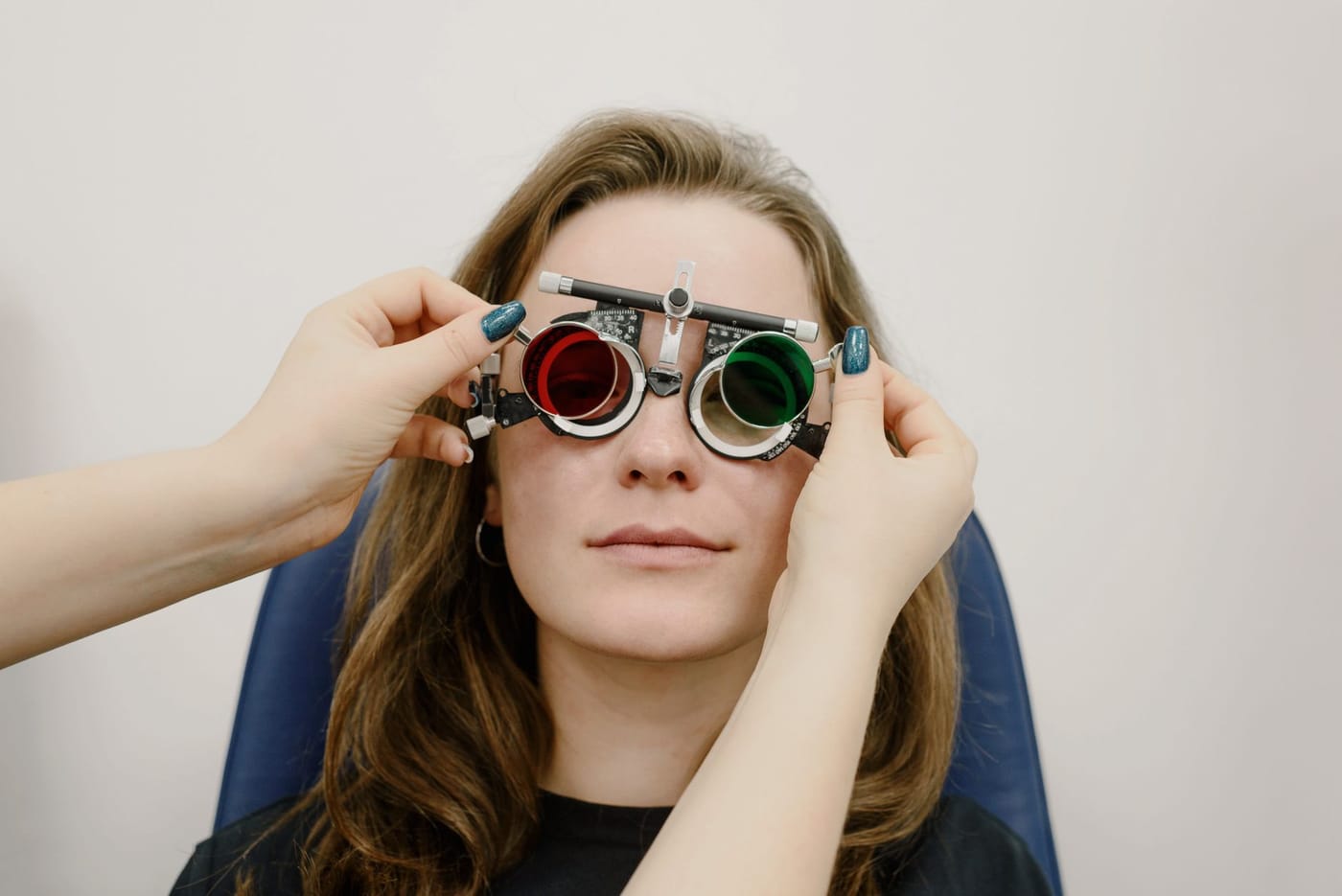
The exam starts with your history and a careful refraction to measure the current prescription precisely. From there the doctor examines the lens at the slit lamp for early cataract, checks the cornea and tear film, and may perform corneal topography if an irregular corneal shape is suspected. A dilated look at the retina and optic nerve rules out other causes of blur, and if the pattern suggests it, the doctor will ask about blood-sugar control. The goal is to separate ordinary aging drift from a change that needs treatment.
Treatment Options
For ordinary age-related change, updated glasses or contact lenses are all that is needed, and progressive or bifocal lenses handle both distance and near. If presbyopia is the issue, reading glasses, multifocal contacts, or monovision are options. When a cataract is the reason the prescription keeps moving and vision is affected, cataract surgery replaces the cloudy lens with a clear implant and often reduces glasses dependence. If diabetes is driving the swings, stabilizing blood sugar usually settles the prescription — new glasses should wait until it is controlled.
What You Should Not Do
- Do not assume a stronger pair off the shelf is the fix if the change is sudden or one-sided.
- Do not buy new glasses during a blood-sugar swing; the numbers will keep moving until sugars stabilize.
- Do not ignore new glare, distortion, or blur that glasses no longer correct.
- Do not skip regular eye-health visits just because you can still function with your current glasses.
When to Call May Eye Care Center
Book a visit if your prescription is changing frequently, if new glasses are not giving you clear vision, or if you notice glare, distortion, or blur in one eye. Adults in the Hanover area benefit from a yearly eye-health check that looks at both the prescription and the health of the eye. Seek urgent care for any sudden vision loss, new flashes or floaters, or severe eye pain rather than waiting for a routine appointment.
Bottom Line
A prescription that keeps changing is usually the natural aging of the lens, but it can also flag an early cataract or a blood-sugar problem, so a medical eye exam — not just another quick refraction — is the safest way to know which.
This page also answers
- Why is my vision blurry even with glasses?
- Can an eye disease make my prescription change?
- What is the difference between astigmatism and presbyopia?
- Do I need glasses, surgery, or a medical eye exam?
- When should adults update their glasses prescription?
- When should this be checked urgently?
- What testing helps confirm the diagnosis?
- What treatments are available?
- What should patients avoid doing at home?
Medical sources
- nei.nih.gov/eye-health-information/eye-conditions-and-diseases/refractive-errors
- nei.nih.gov/eye-health-information/eye-conditions-and-diseases/astigmatism
- aao.org/eye-health/tips-prevention/eye-exams-101
This article is for educational purposes only and is not a diagnosis, treatment plan, or substitute for an eye examination by a qualified eye doctor. Eye symptoms can have many causes, and some problems can threaten vision if they are not treated promptly. Do not diagnose or treat yourself based only on online information. If you have eye pain, sudden vision loss, flashes, new floaters, a curtain or shadow in your vision, double vision, chemical exposure, trauma, severe redness, light sensitivity, or any concerning eye symptom, seek urgent medical eye care or emergency care.
Schedule your eye exam at May Eye Care Center in Hanover, PA
Serving York, Gettysburg, Adams County, and northern Maryland (driving distances). Call (717) 637-1919 or explore more about eye exam & vision at our practice.
Call (717) 637-1919